
Boris Anrep's National Gallery floor mosaics
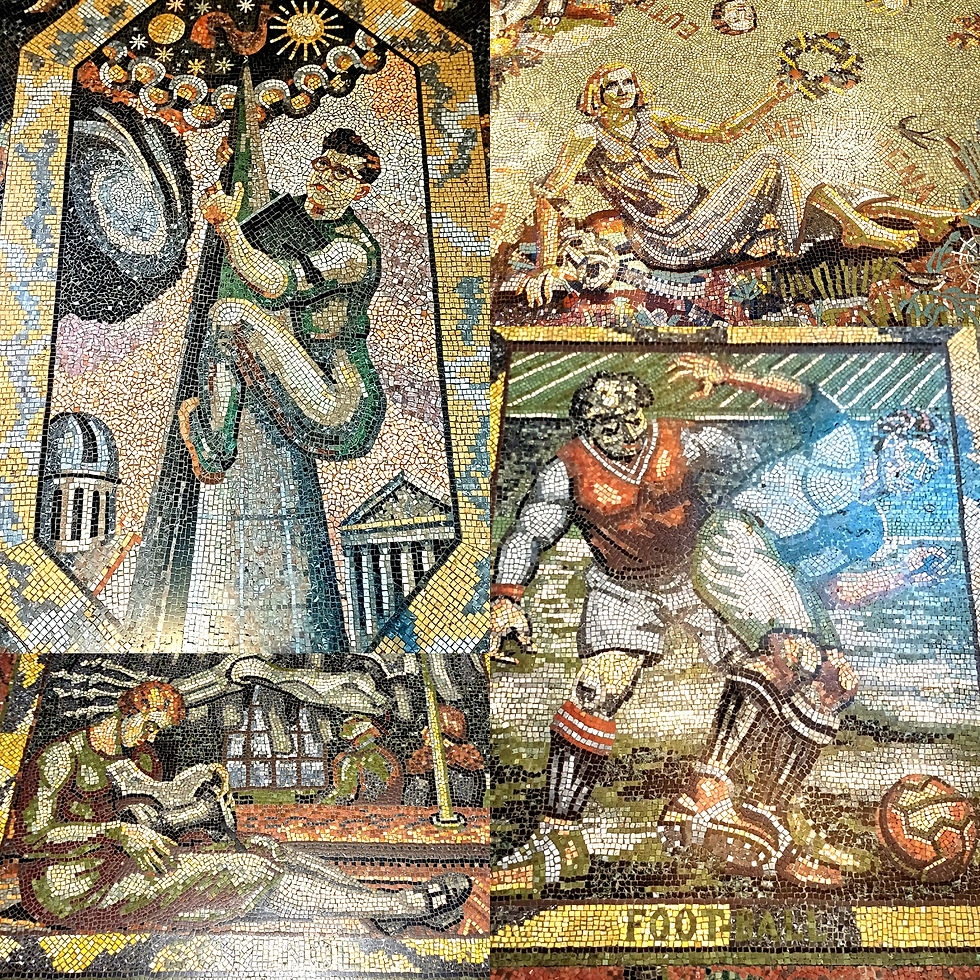
Hiding in plain sight, mosaics of the Muses, Modern Virtues, Pleasures and Labours are among the gallery's best artworks.
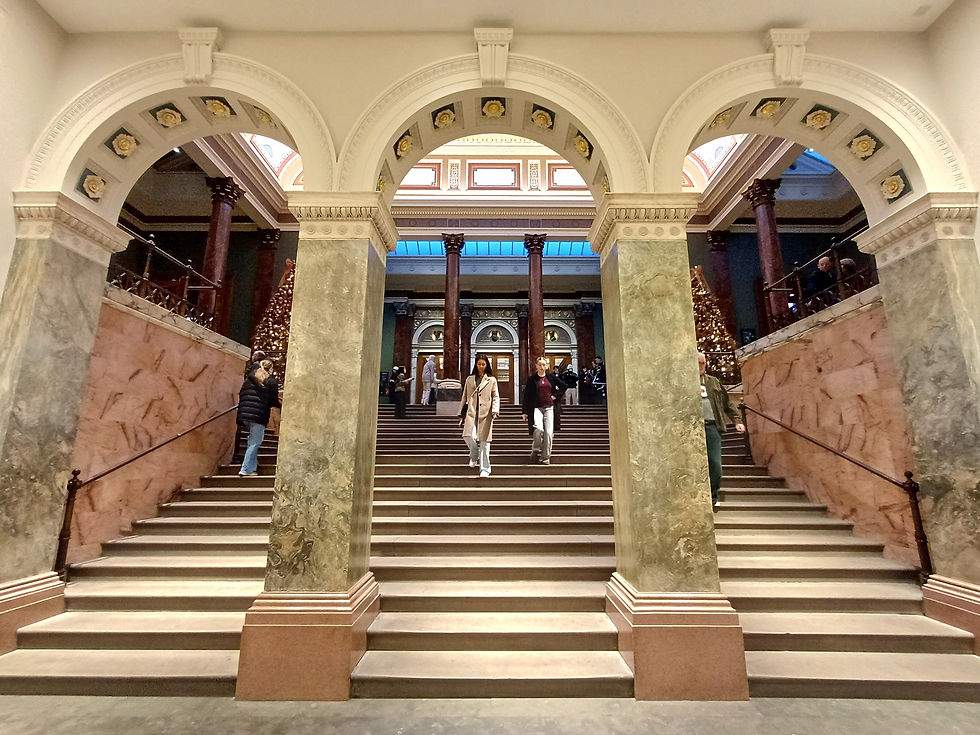
The entrance hall to the National Gallery in Trafalgar Square contains four floor areas of mosaics created by Boris Anrep between 1928 and 1952. The Russian-born mosaicist mixed with the Bloomsbury Group of artists and writers, together with other noted 20th century intellectuals and socialites (some of whose faces made it into these mosaics).
Walks available for booking
For a schedule of forthcoming London On The Ground guided walks and tours, please click here.
A half-landing at the top of the first set of steps in the entrance hall is tiled with Anrep's mosaic of the Muses. Straight up from this work, the Modern Virtues occupy the floor of the North Vestibule, while the floor to the right (the East Vestibule) contains the Pleasures of Life and the floor to the left (the West Vestibule) displays the Labours of Life.
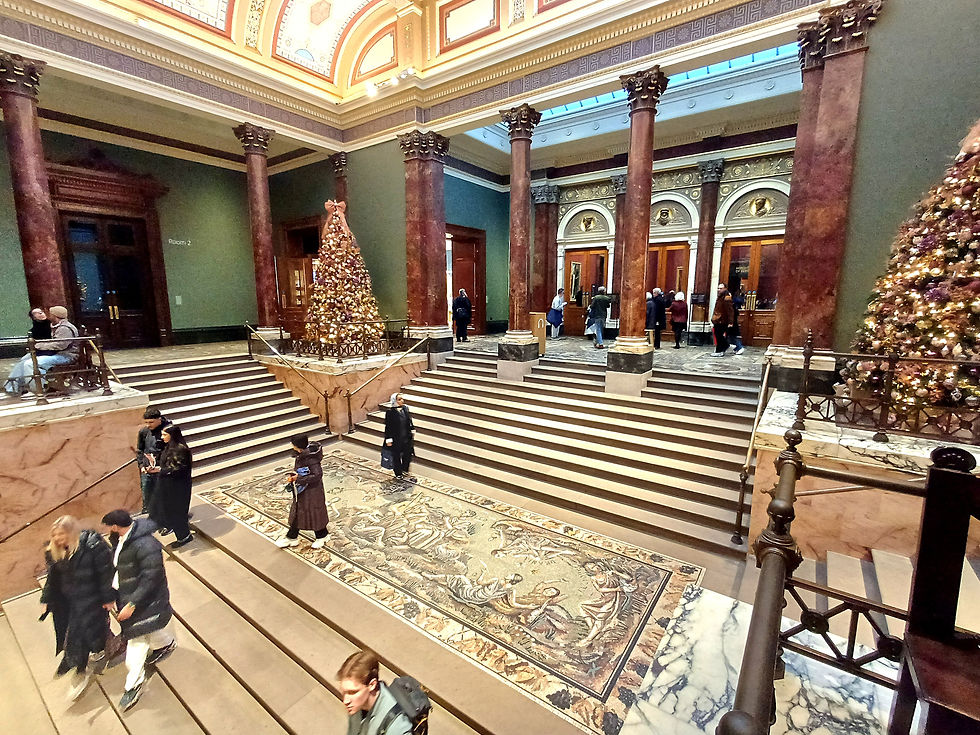
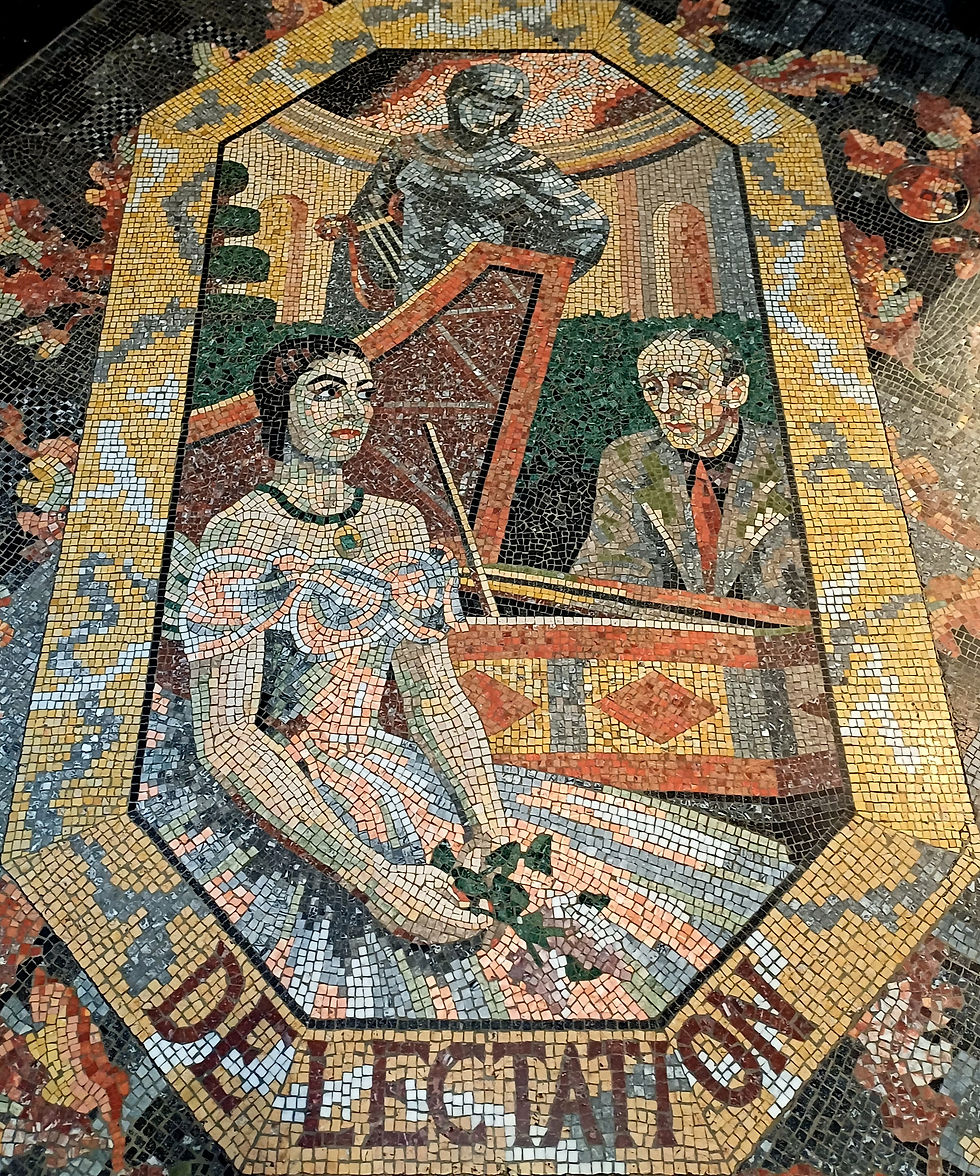
The Muses and the Modern Virtues include faces of famous people of the time, many of whom moved in the same circles as Anrep. These include Virginia Woolf, Greta Garbo, Margot Fonteyn, Bertrand Russell, Edith Sitwell, Augustus John and Winston Churchill.
These mosaics are very much of their time, but they are keenly observed, and surprisingly witty, vignettes of British culture in the middle of the 20th century.
Apart from two that were obscured by Christmas trees when I visited in mid December 2025, my photographs of every one of Boris Anrep's excellent National Gallery mosaics are shown below. I have also included a brief description of each mosaic and (where relevant) the famous faces portrayed (taken from an out of print guide to the mosaics published by the National Gallery).
The mosaics are lit with downlights, which give fairly harsh reflections in some of the photos.
Half Landing: The Awakening Of The Muses
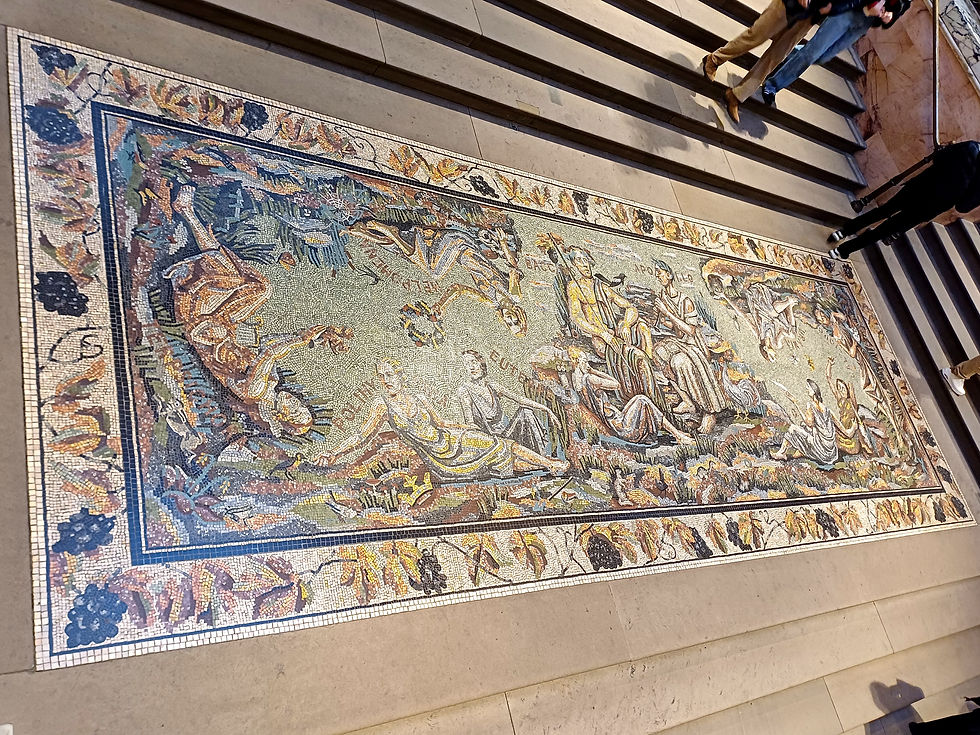
Opened in July 1933, The Awakening Of The Muses was a gift of industrialist Samuel Courtauld (founder of the Courtauld Institute of Art) and other benefactors.
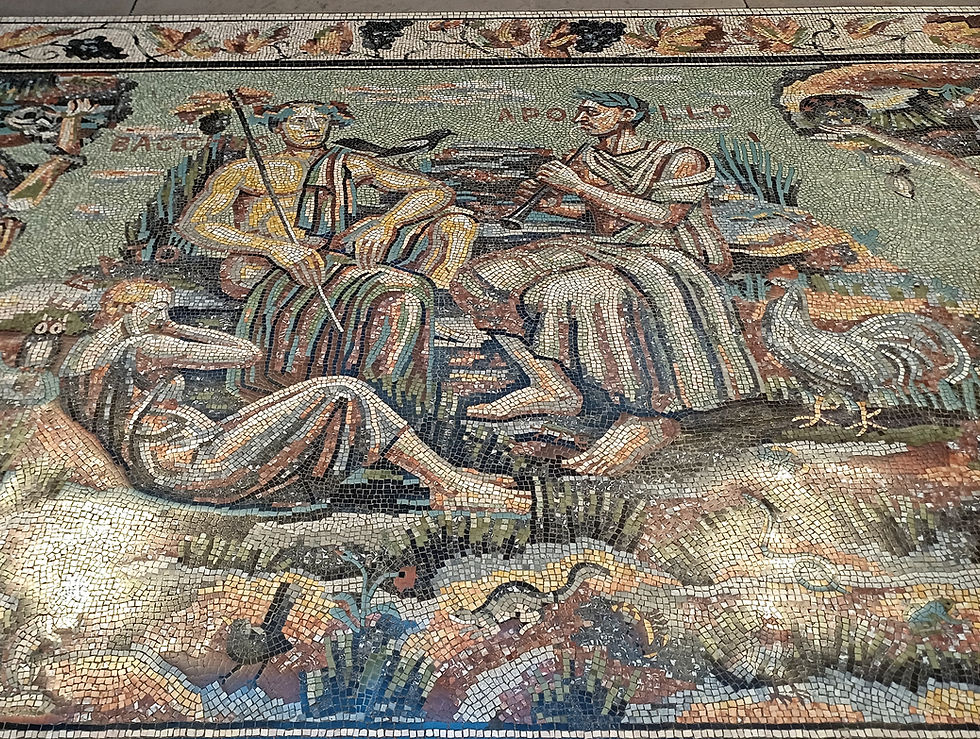
BACCHUS, God of Wine: Clive Bell.
APOLLO, God of Music: Sir Osbert Sitwell.
FRATO, Muse of Lyric Poetry: Mrs St-John Hutchinson.
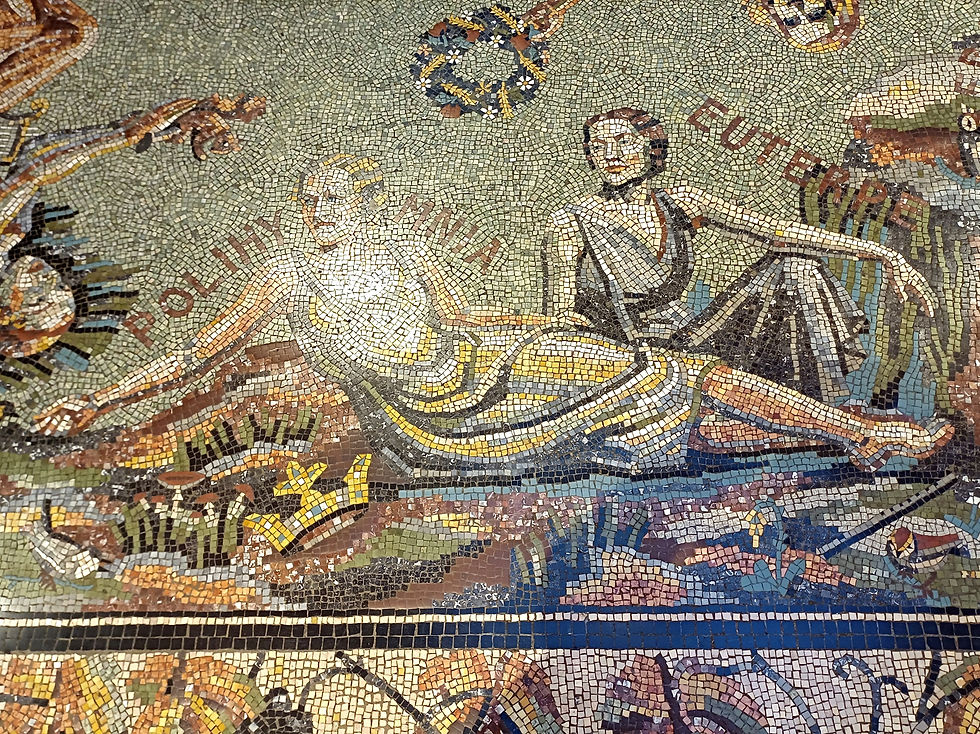
POLYHYMNIA, Muse of Heroic Hymns: Hon. Mrs Bryan Guinness (Diana Mitford).
EUTERPE, Muse of Music: Christabel, Lady Aberconway.
CLIO, Muse of History: Virginia Woolf.
THALIA, Muse of Comedy: The Countess Jowitt.
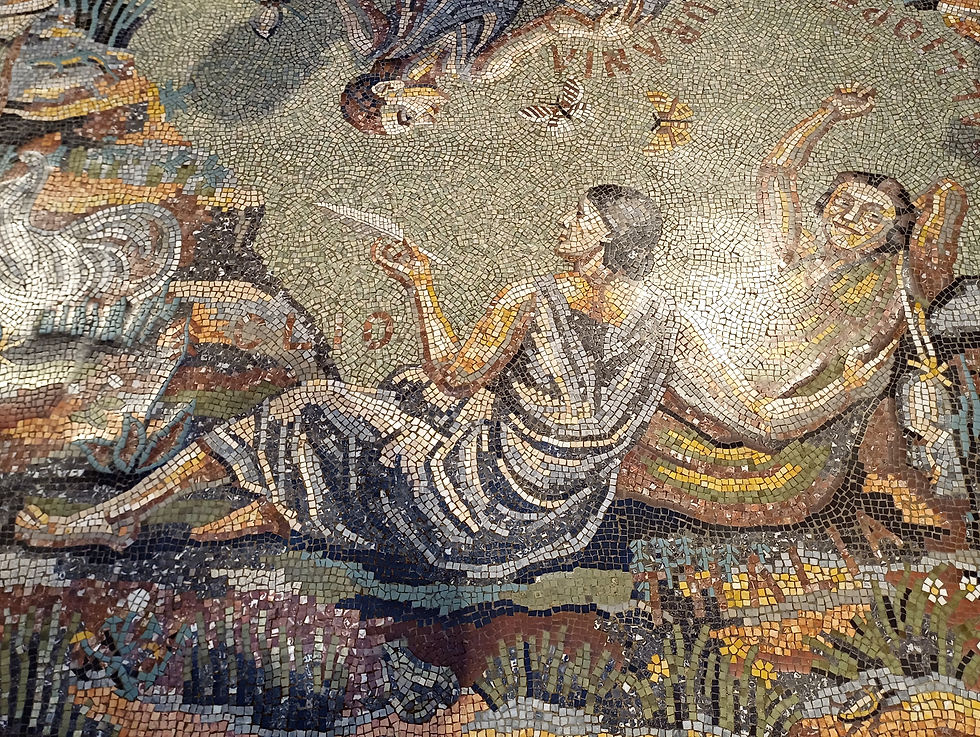
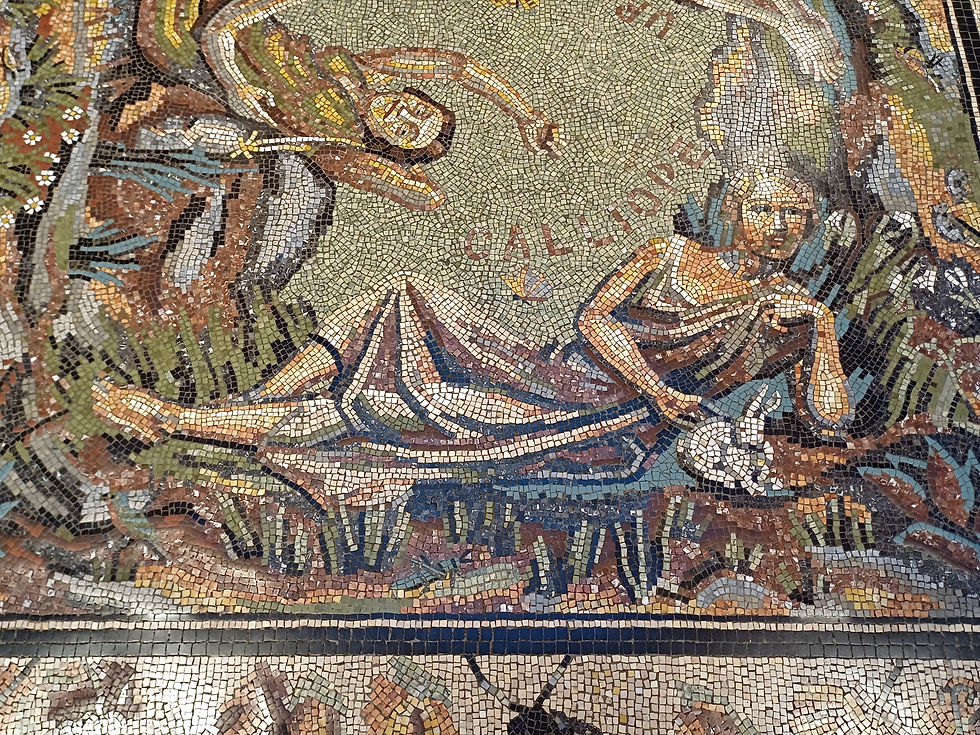
CALLIOPE, Muse of Epic Poetry: unknown sitter.
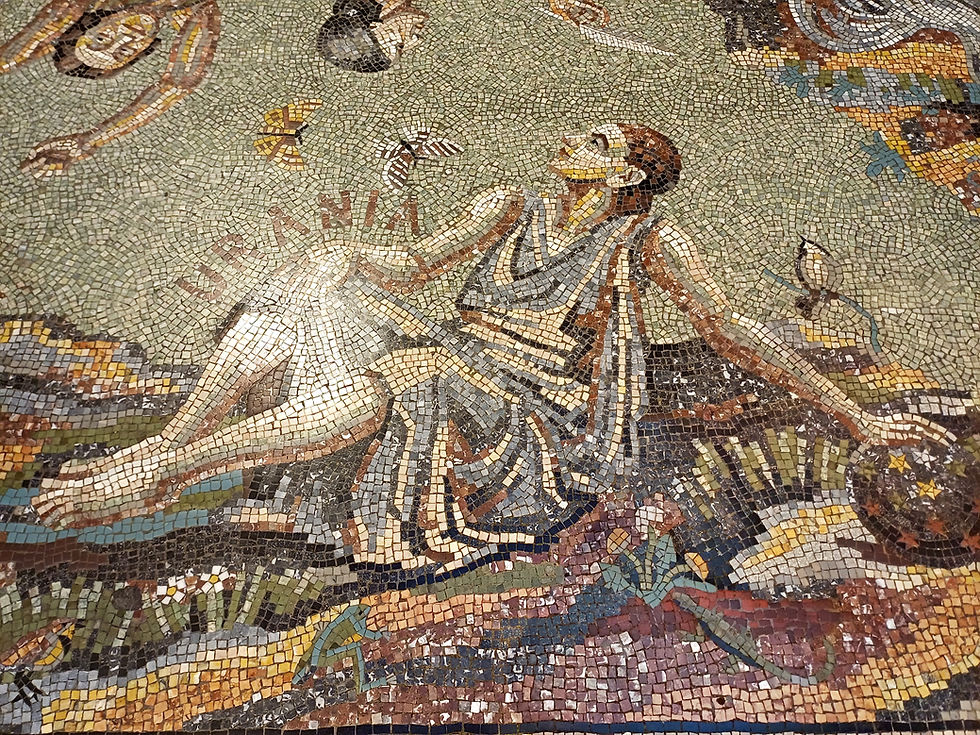
URANIA, Muse of Astronomy: Madame Maria Volkova, Boris Anrep's sister-in-law.
MELPOMENE, Muse of Tragedy: Greta Garbo.

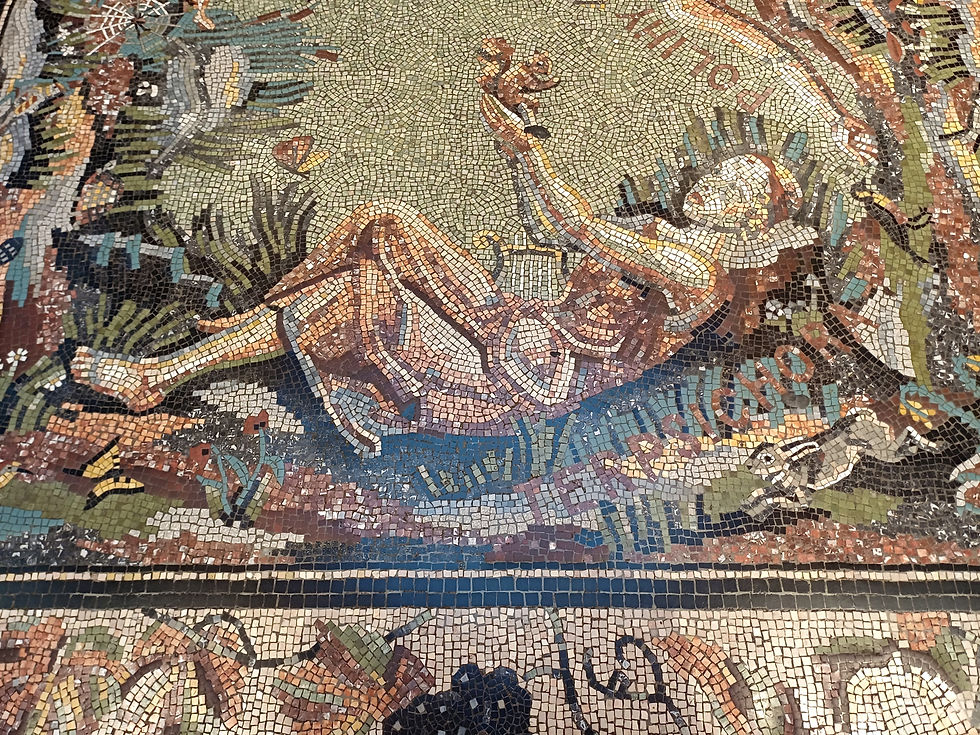
TERPSICHORE, Muse of Dancing: Lady Keynes (Lydia Lopokova).
North Vestibule: The Modern Virtues
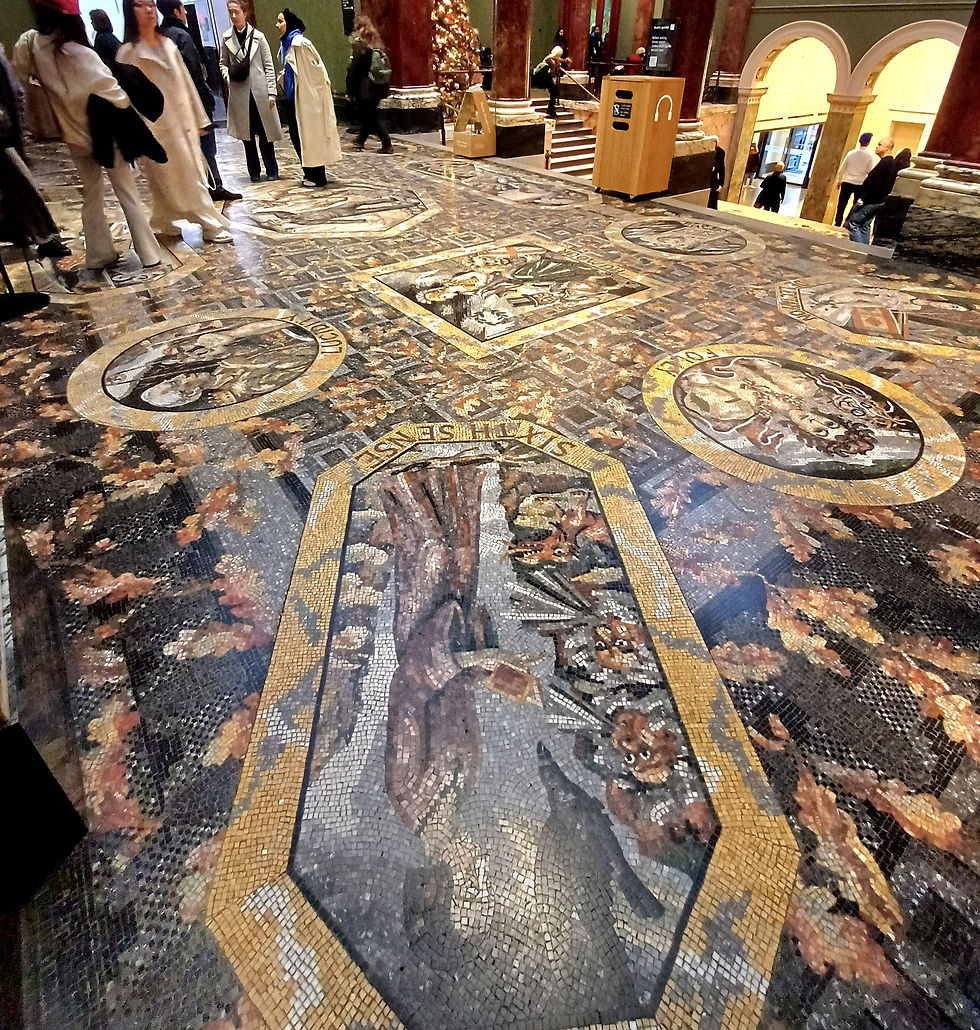
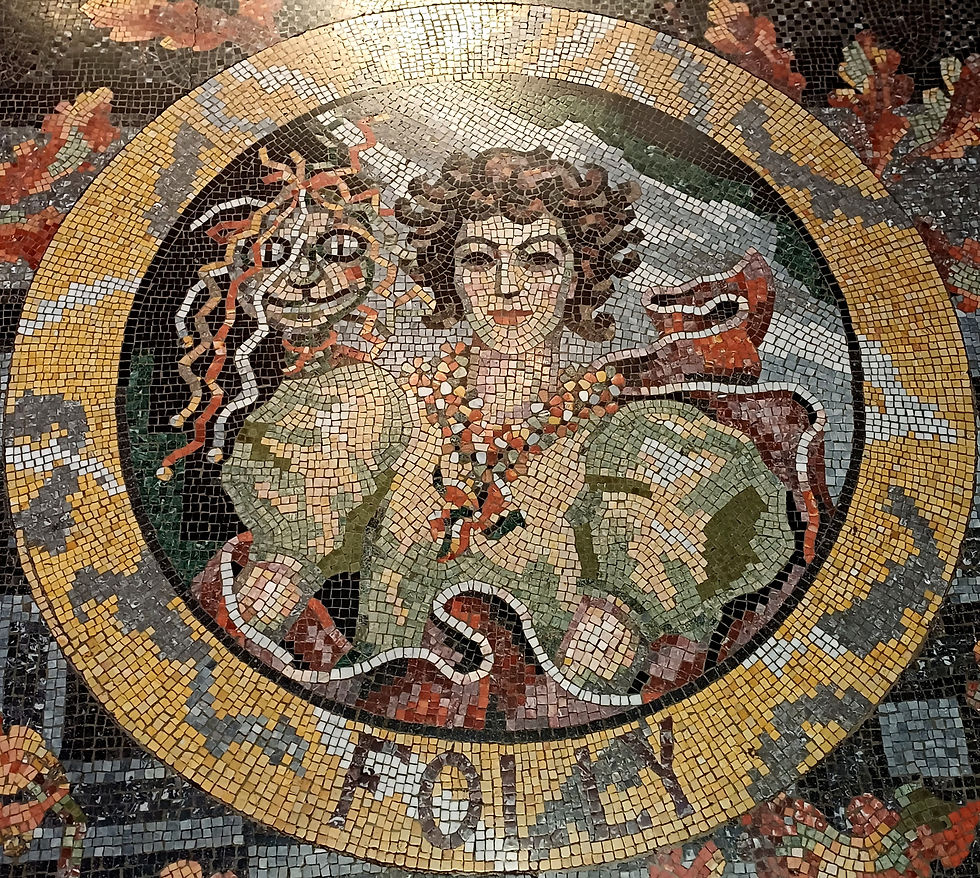
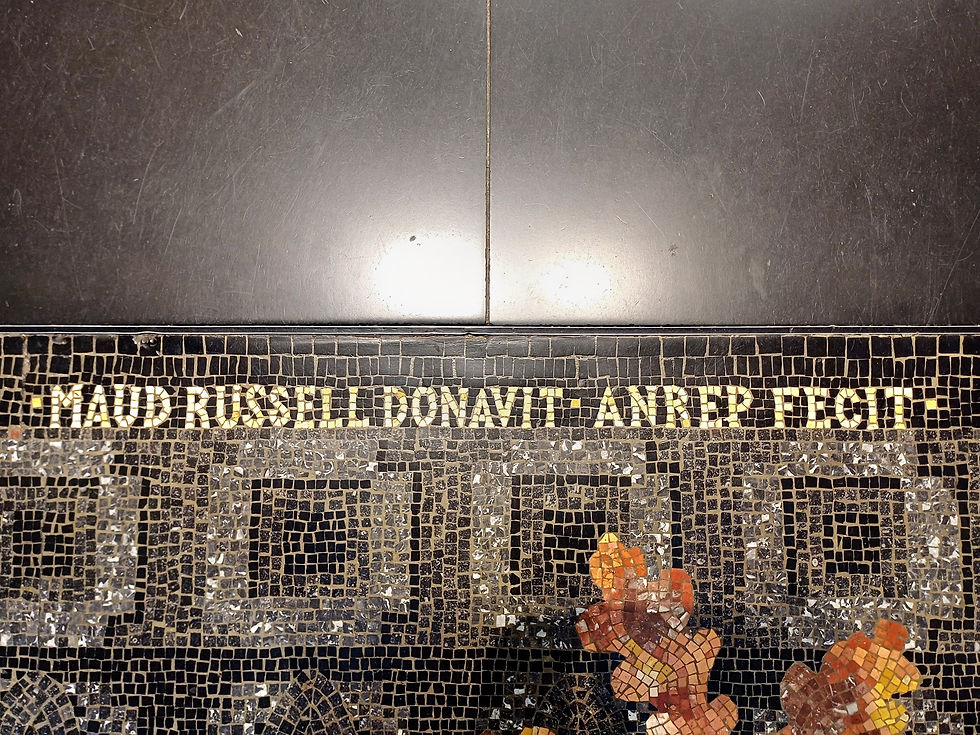
The Modern Virtues, opened on 25 November 1952, was the gift of Boris Anrep's friend Maud Russell, a patron of the arts and wife of banker Gilbert Russell (and a closed friend of James Bond author Ian Fleming). She is depicted in the mosaic 'FOLLY' (see below).
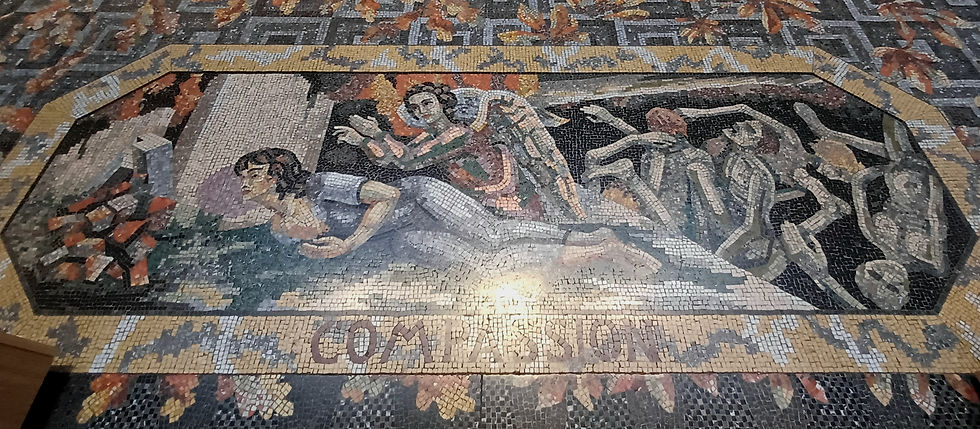
COMPASSION: Russian poet, Anna Akhmatova, surrounded by the horrors of war, is visited by an angel.
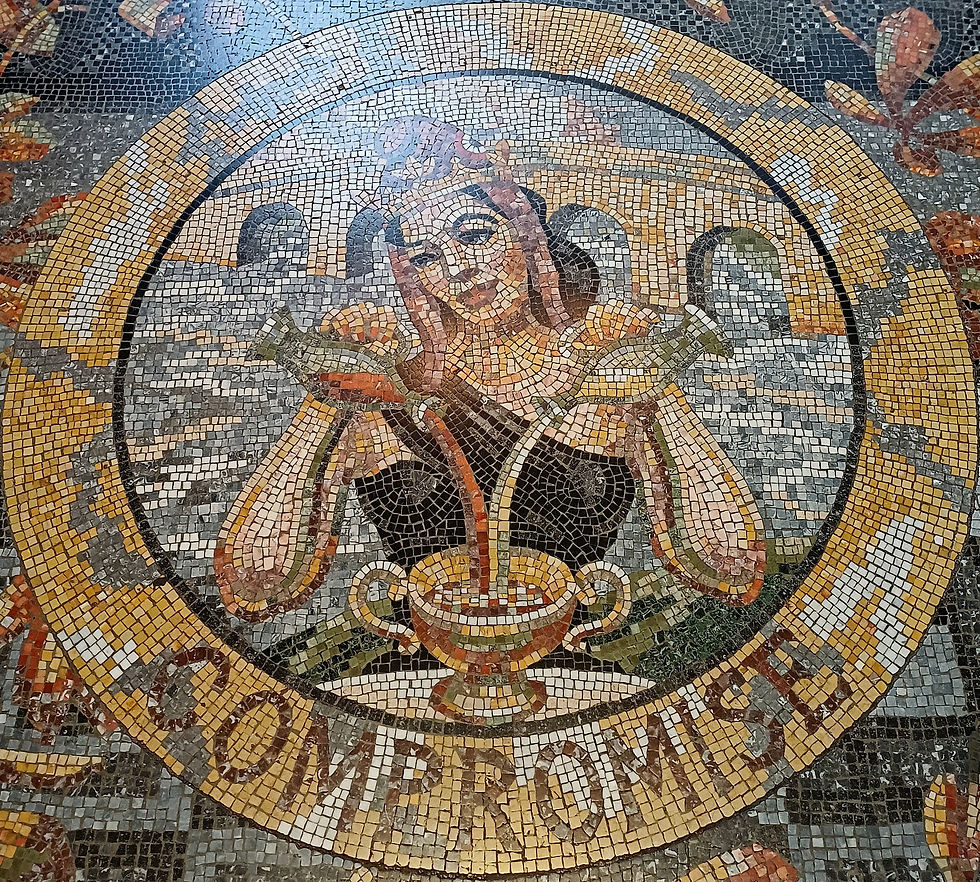
COMPROMISE: American actress, Loretta Young, wearing a Liberty (Phrygian) cap as well as a crown, fills a loving cup with red and white wine.
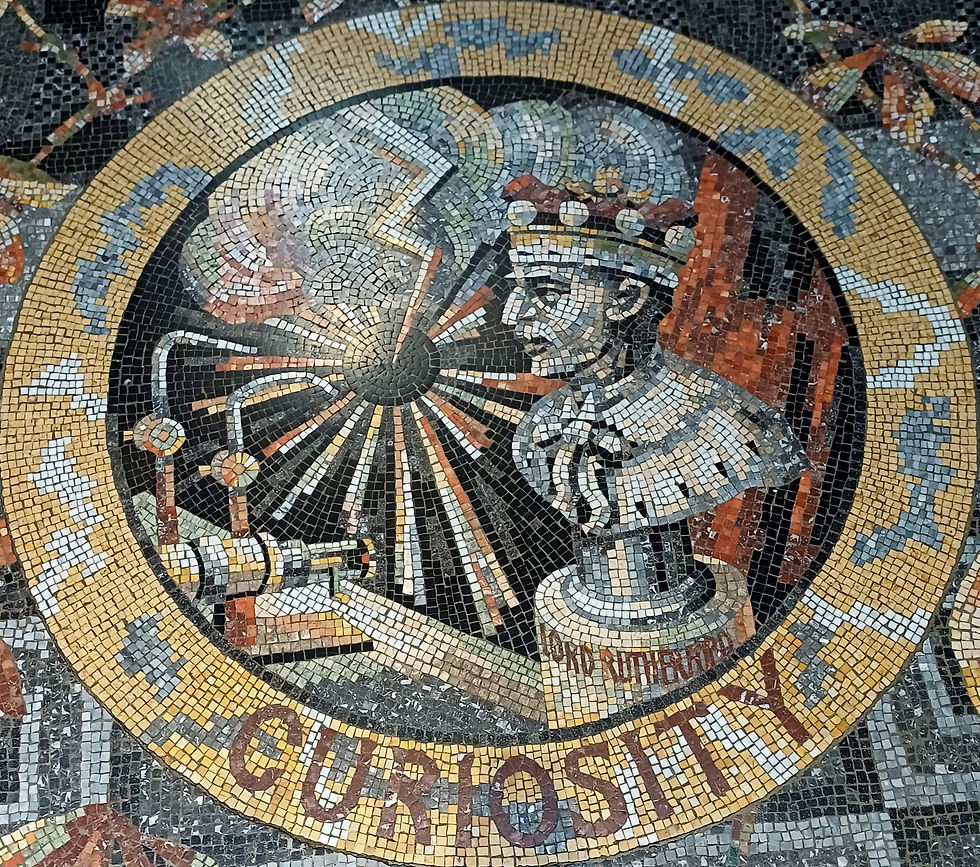
CURIOSITY: a bust of the physicist Lord Rutherford, with a splitting atom.
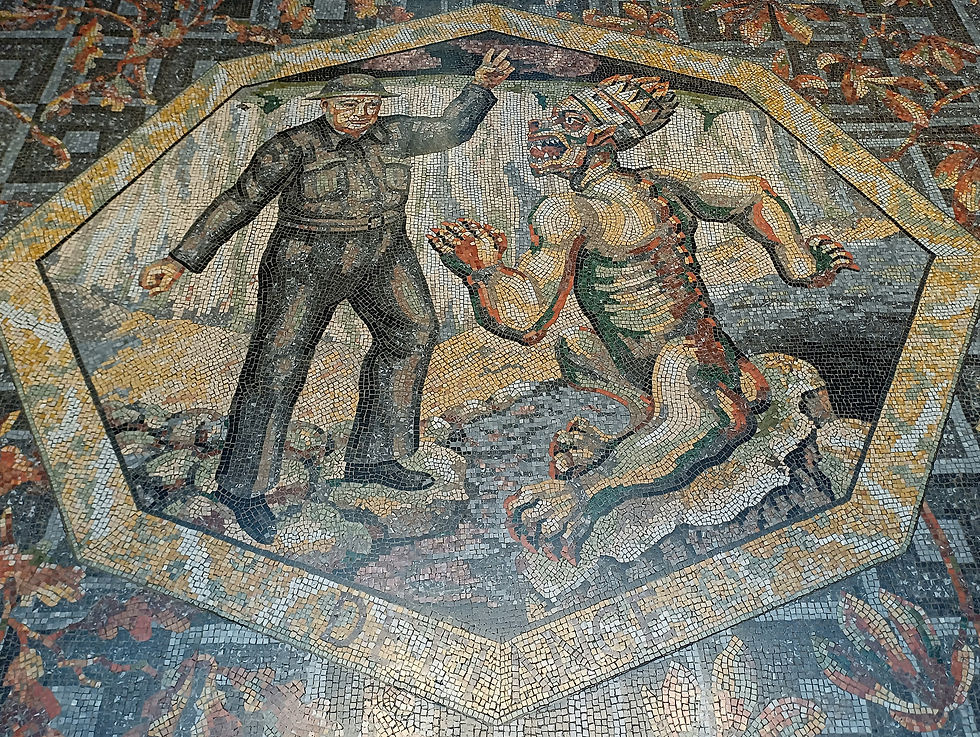
DEFIANCE: Sir Winston Churchill stands before the white cliffs of Dover and defies an apocalyptic beast, in the shape of a swastika, which threatens British shores.
DELECTATION: ballerina Dame Margot Fonteyn listens to the Hon. Edward Sackville-West playing the harpsichord.
FOLLY: Maud Russell (Mrs Gilbert Russell), patron of the Arts (who paid for this set of mosaics).
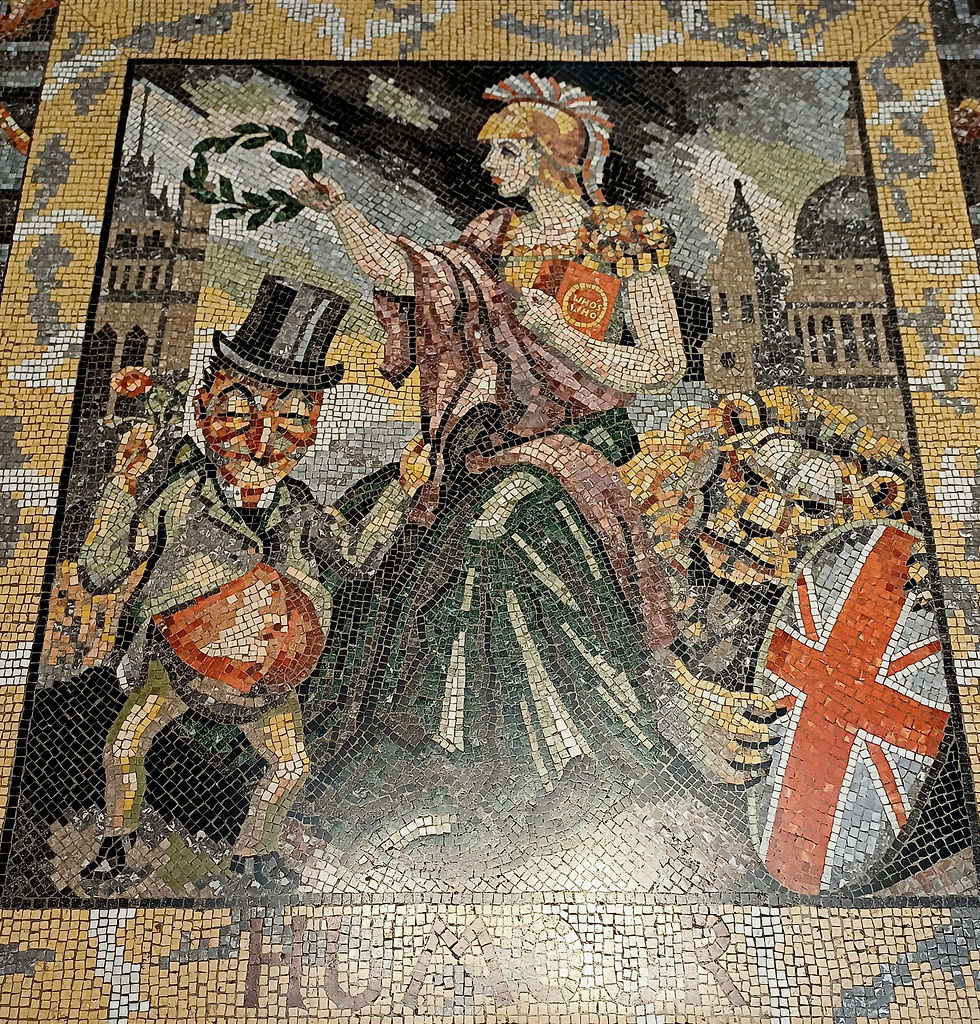
HUMOUR: Lady Diana Cooper, as Britannia, crowns Punch, the embodiment of Humour.
LEISURE: poet T.S. Eliot contemplates Loch Ness and Einstein's formula; symbols of Painting and Sculpture are on the left.

LUCIDITY: philosopher Bertrand Russell pulls the symbolic figure of Truth from a well and plucks off her mask.

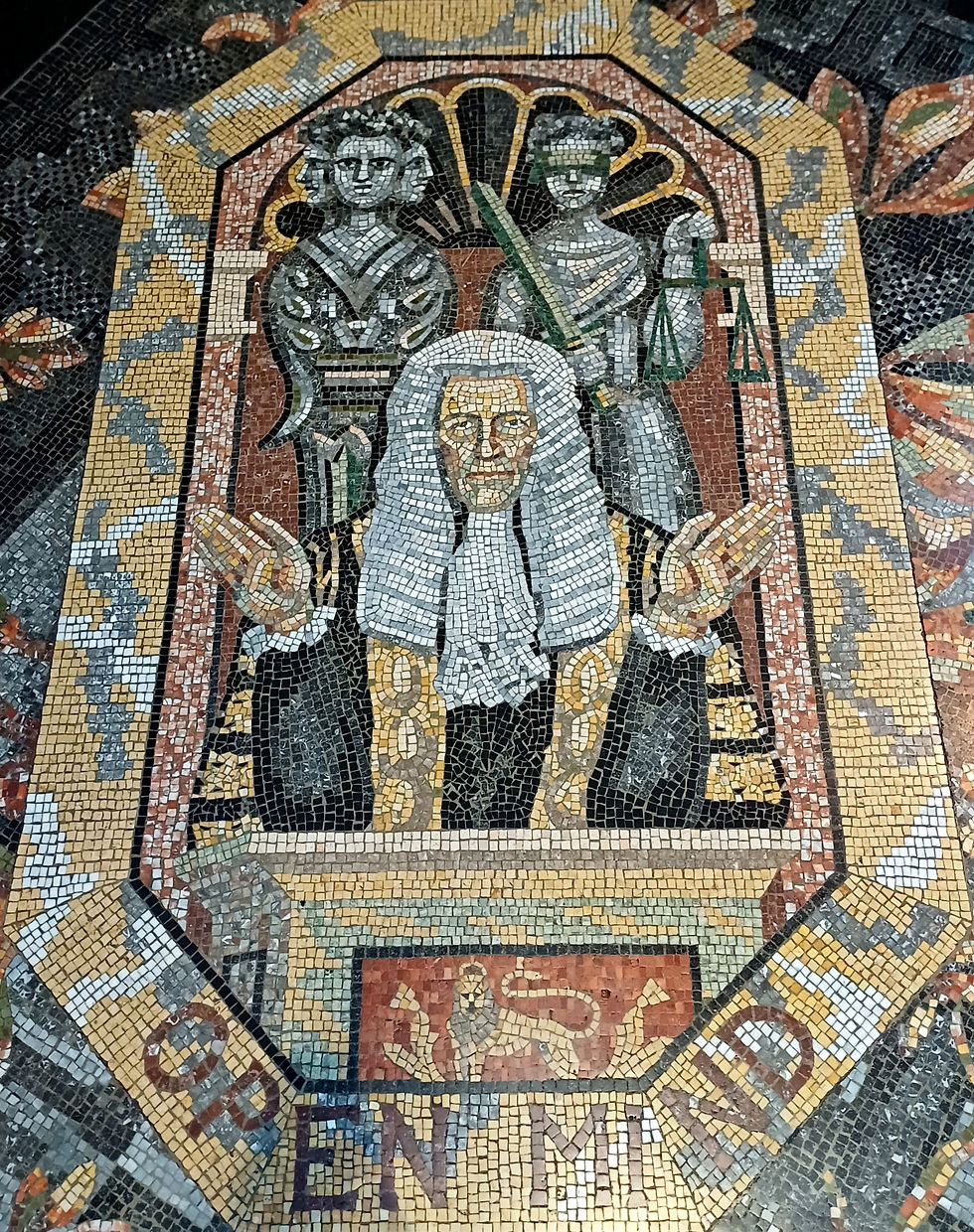
OPEN MIND: The Rt Hon Earl Jowitt, in his robes as Lord Chancellor, in front of statues of Hecate and Justice.
PURSUIT: astronomer Professor Sir Fred Hoyle is represented as a steeplejack.
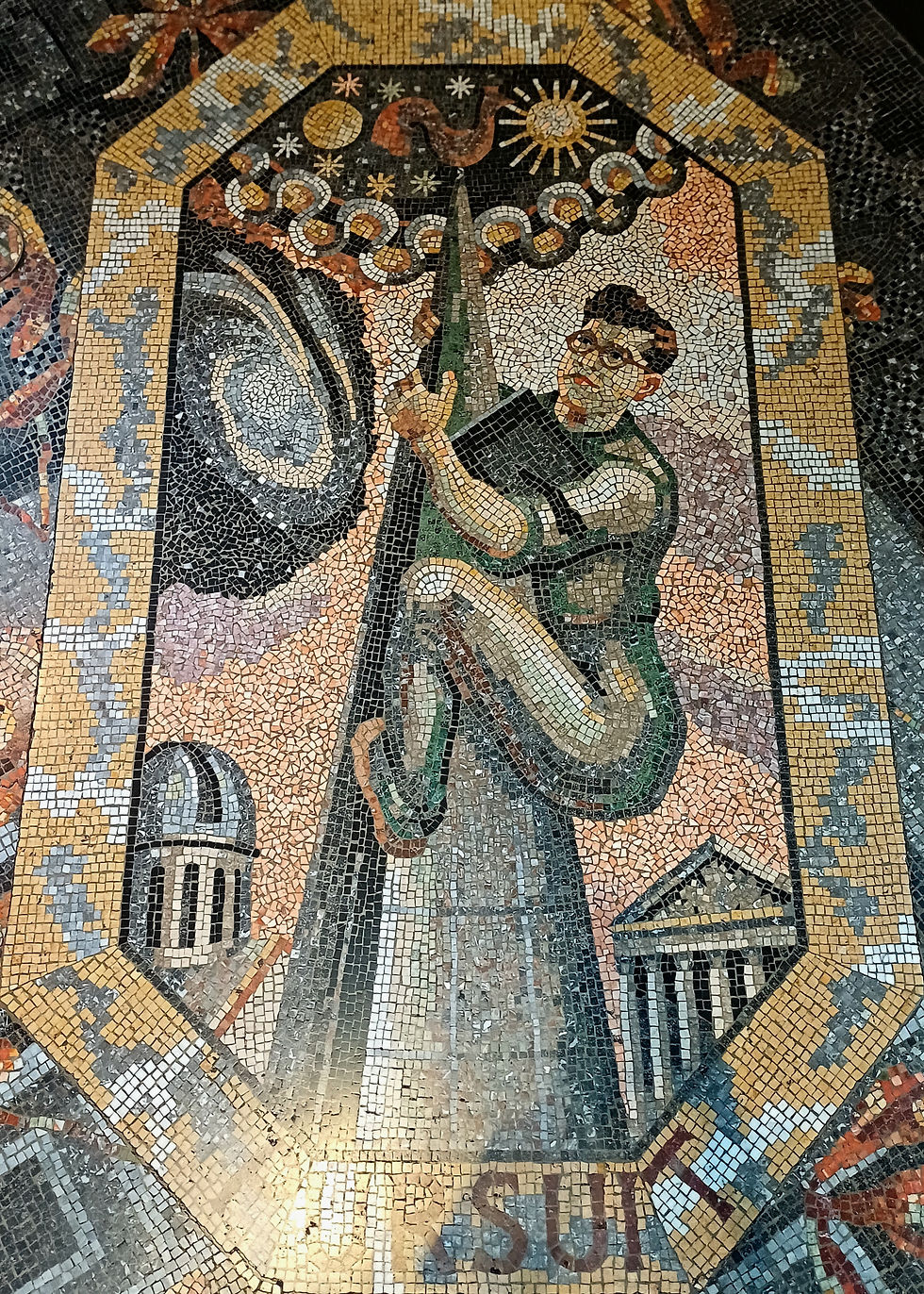
SIXTH SENSE: writer Dame Edith Sitwell reading a book of poems, crosses a chasm unafraid, while terrifying beasts and a raven threaten.

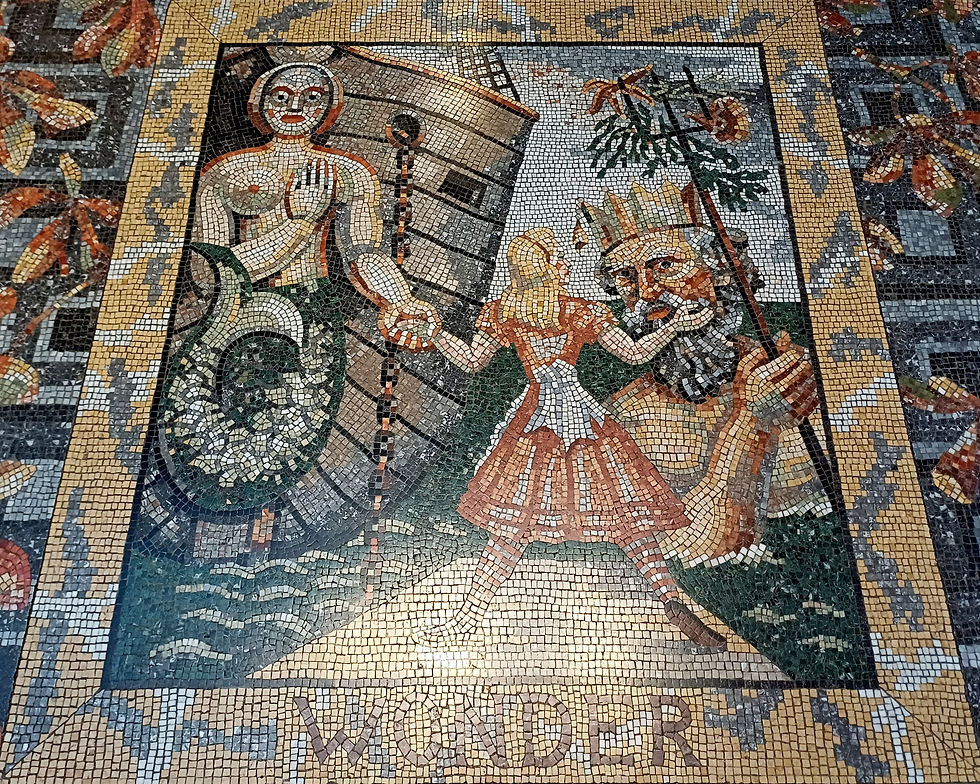
WONDER: painter Augustus John as Neptune offers Alice in Wonderland gifts from the sea, while a figurehead invites her to embark on new adventures.
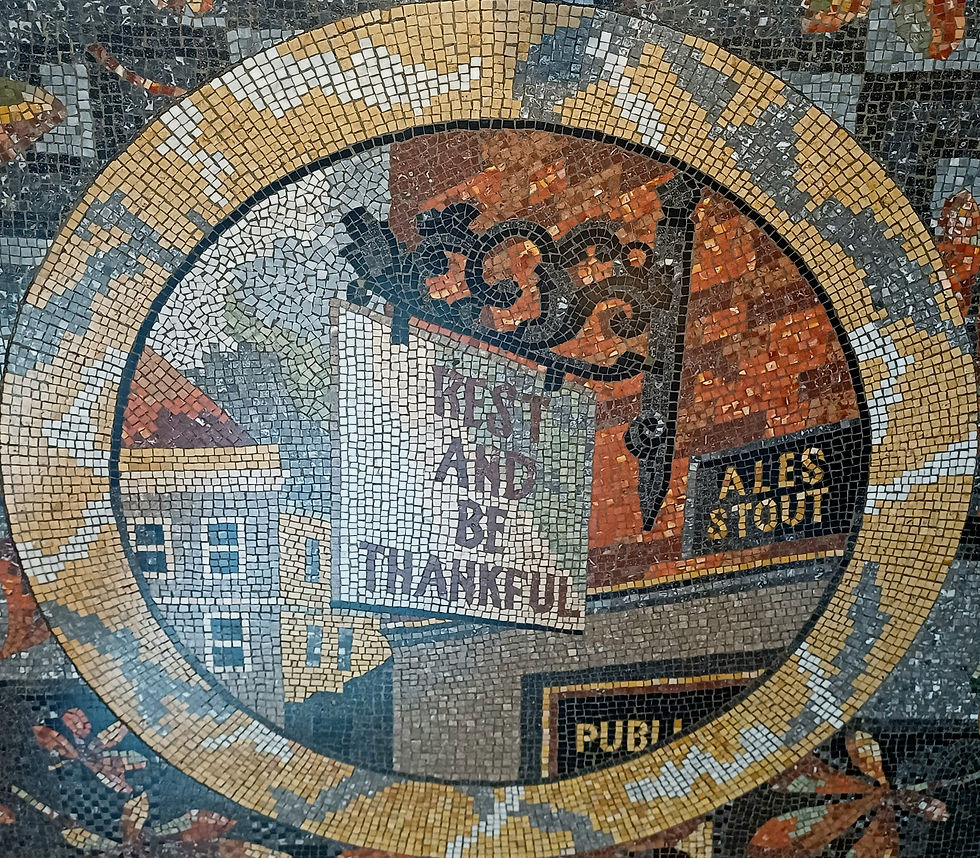
REST AND BE THANKFUL: signboard of a public house in Kent.
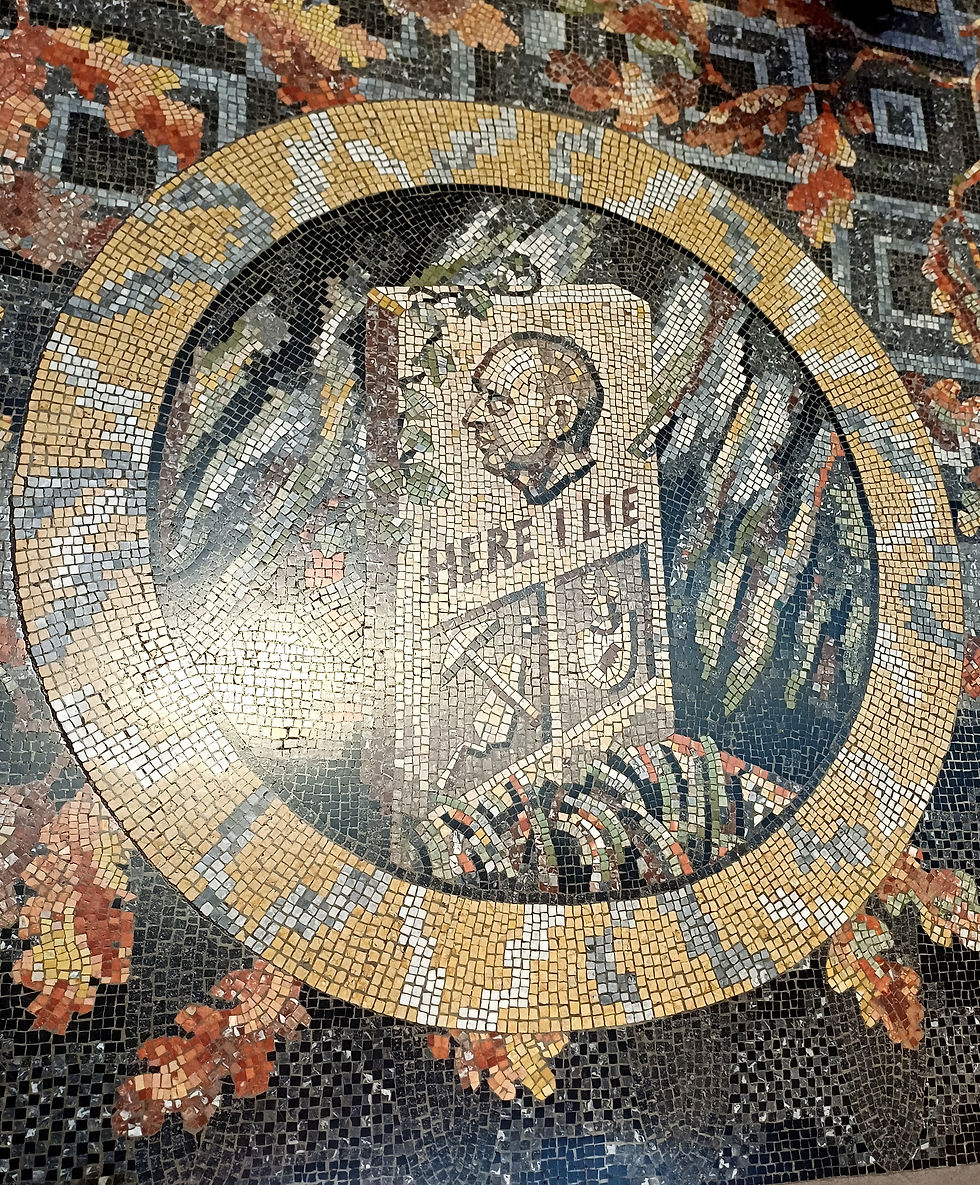
HERE I LIE: tomb of Boris Anrep emblazoned with a self-portrait relief, a hammer and trowel and a family crest.
East Vestibule: The Pleasures Of Life
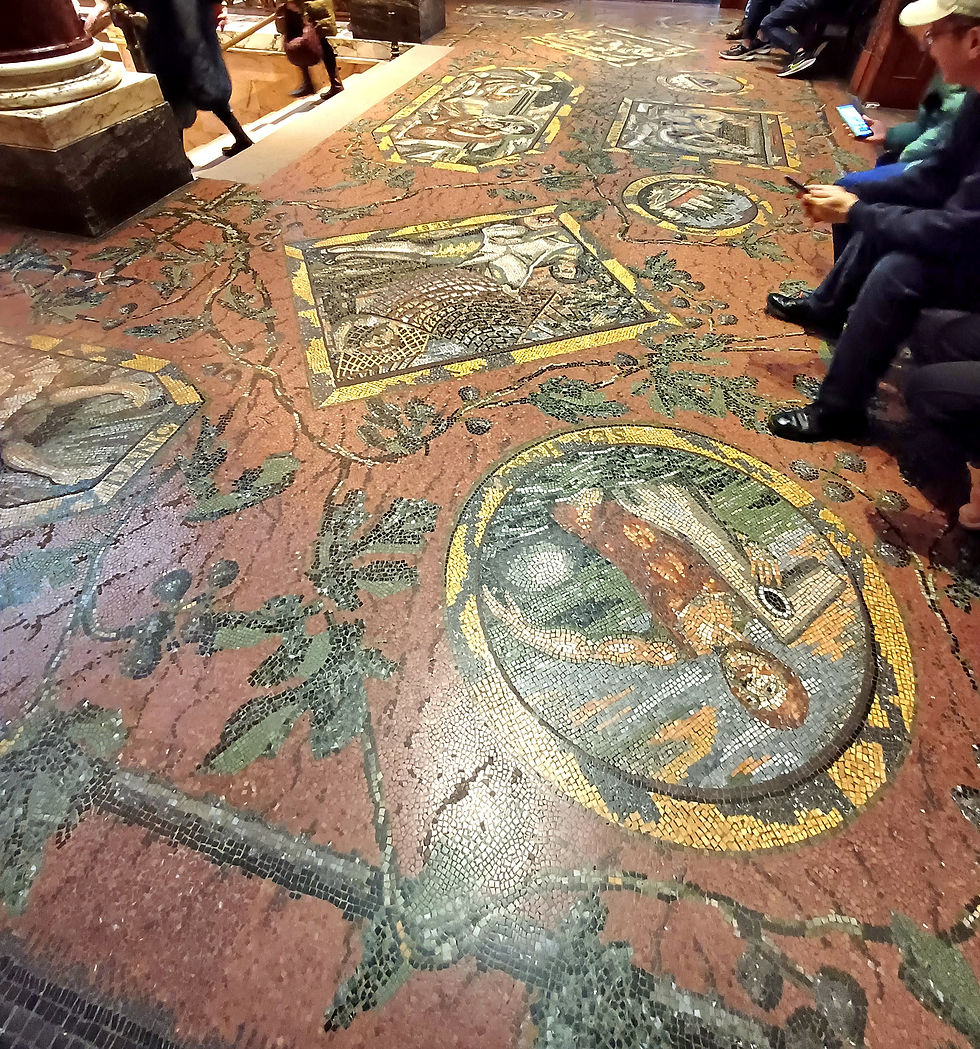
Opened on 13 November 1929, the Pleasure of Life was another gift of Samuel Courtauld and other benefactors.
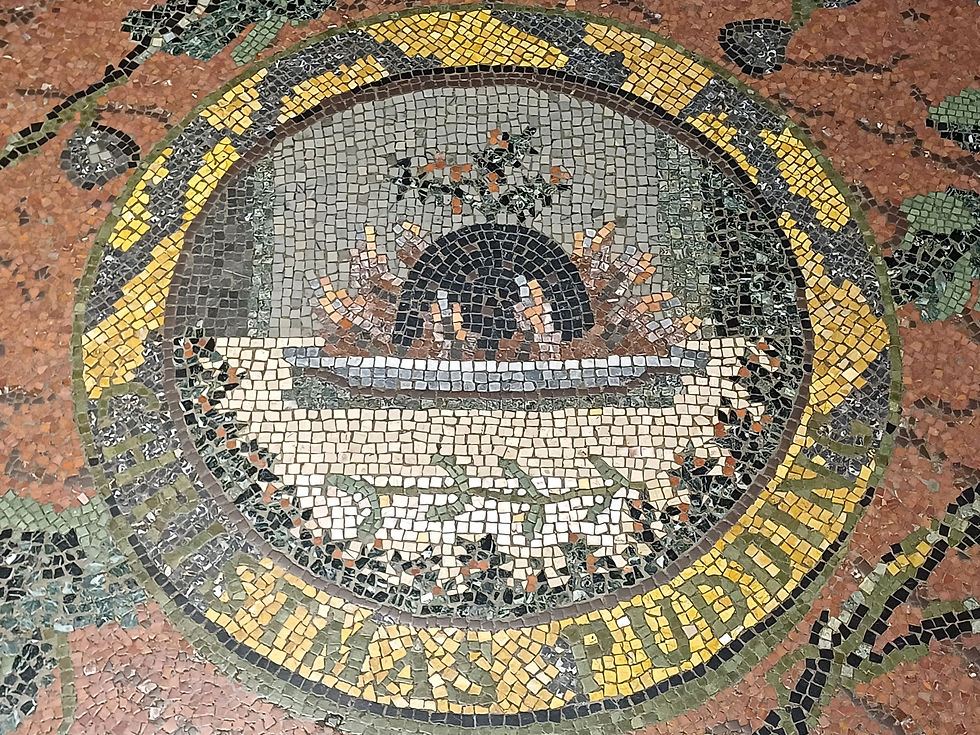
CHRISTMAS PUDDING: a pudding aflame with brandy.
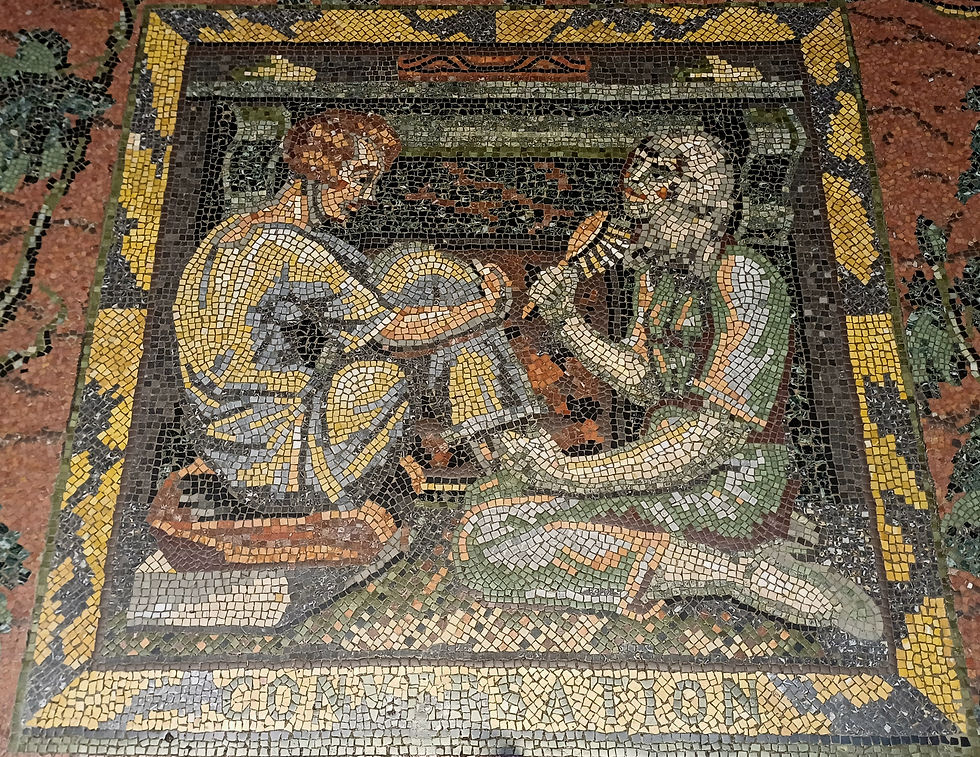
CONTEMPLATION: three men in thought.

CONVERSATION: two girls talking in front of a fireplace.
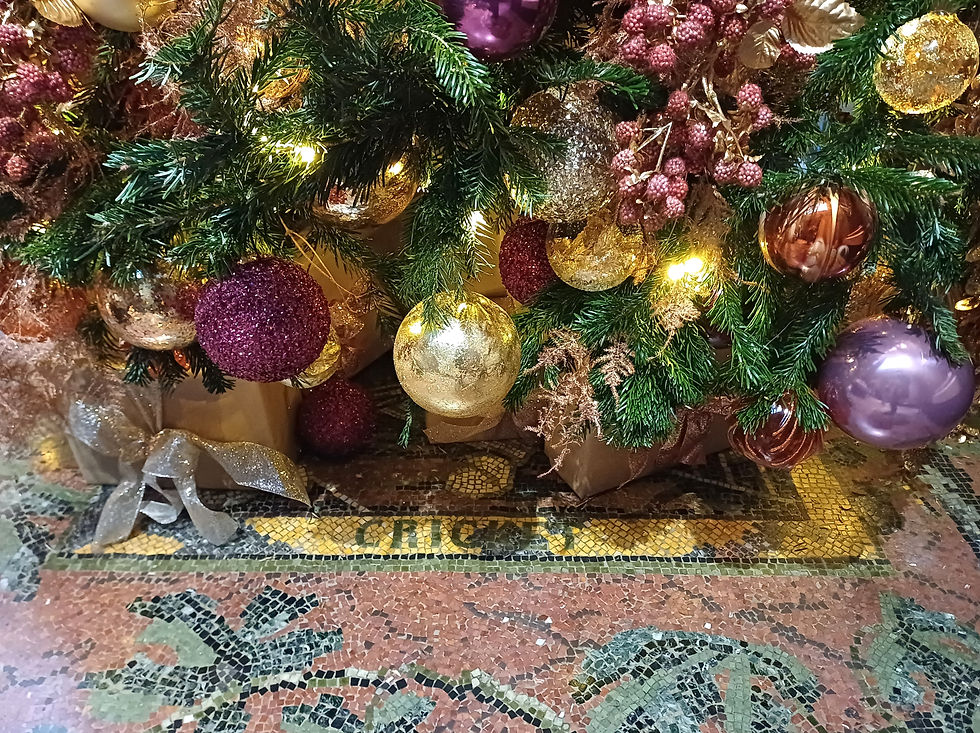
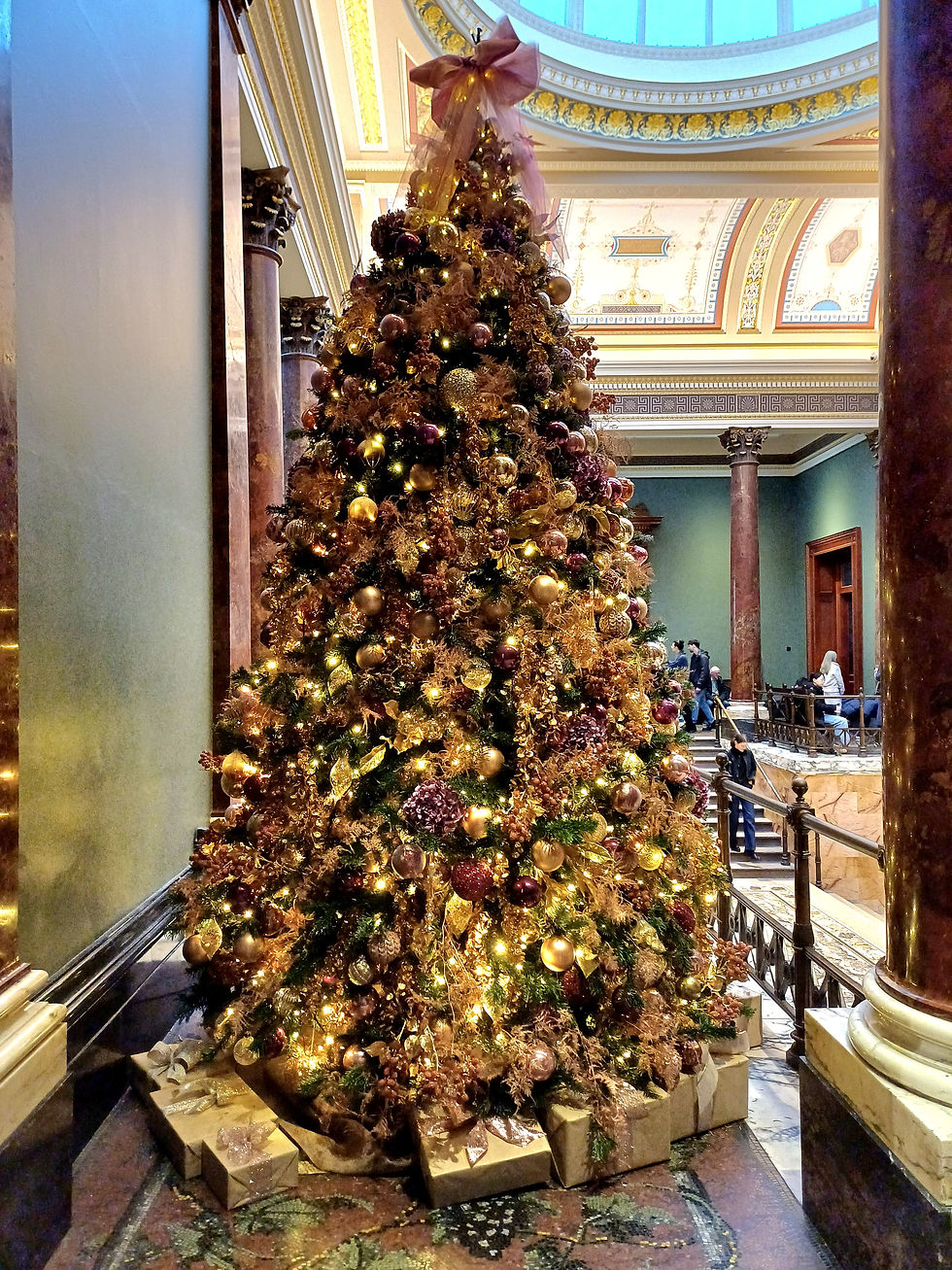
CRICKET: a batsman about to be caught at the wicket (he was hiding underneath a Christmas tree in mid December 2025, presumably ashamed by his careless dismissal).
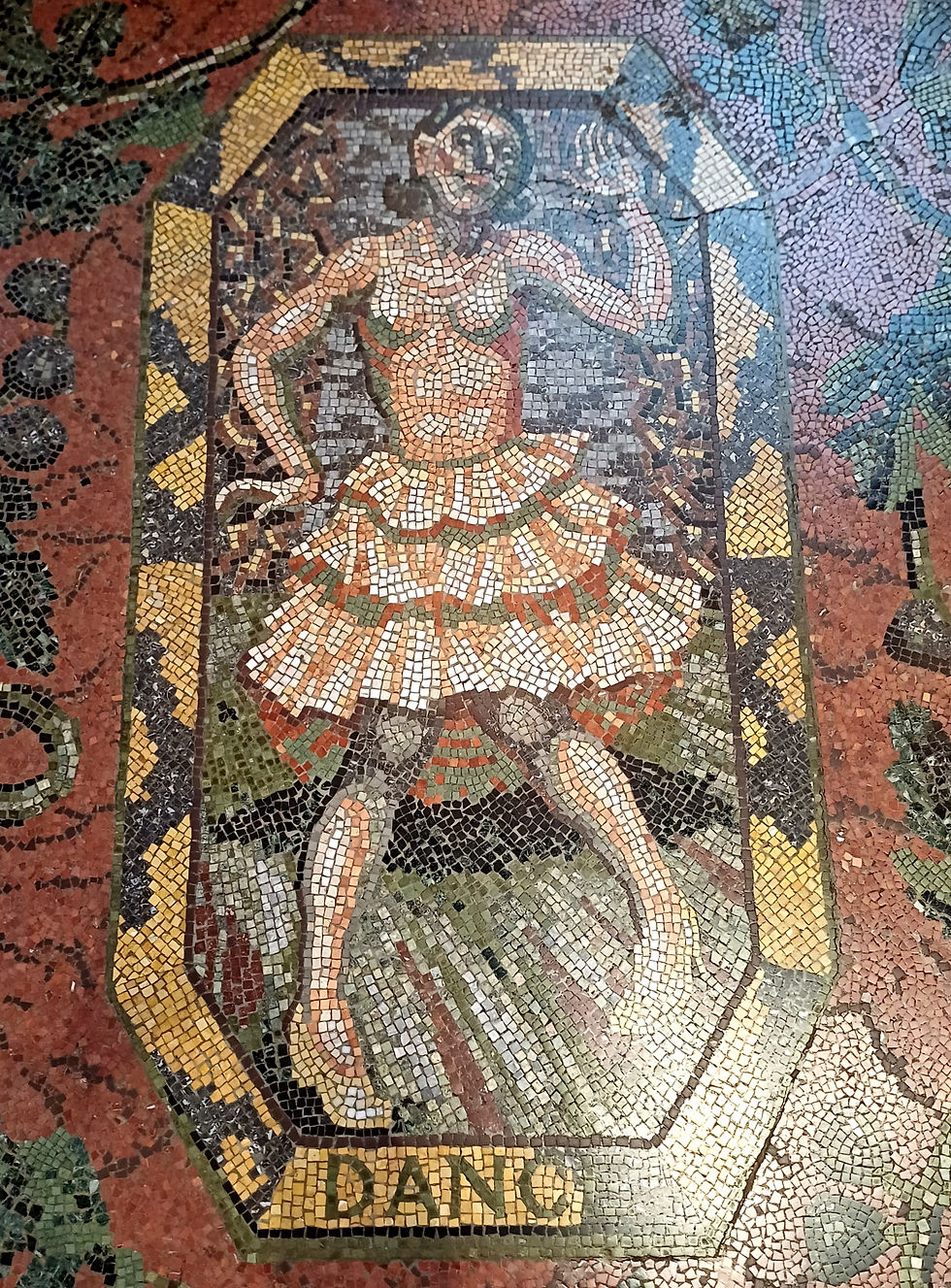
DANCE: a girl jiving.
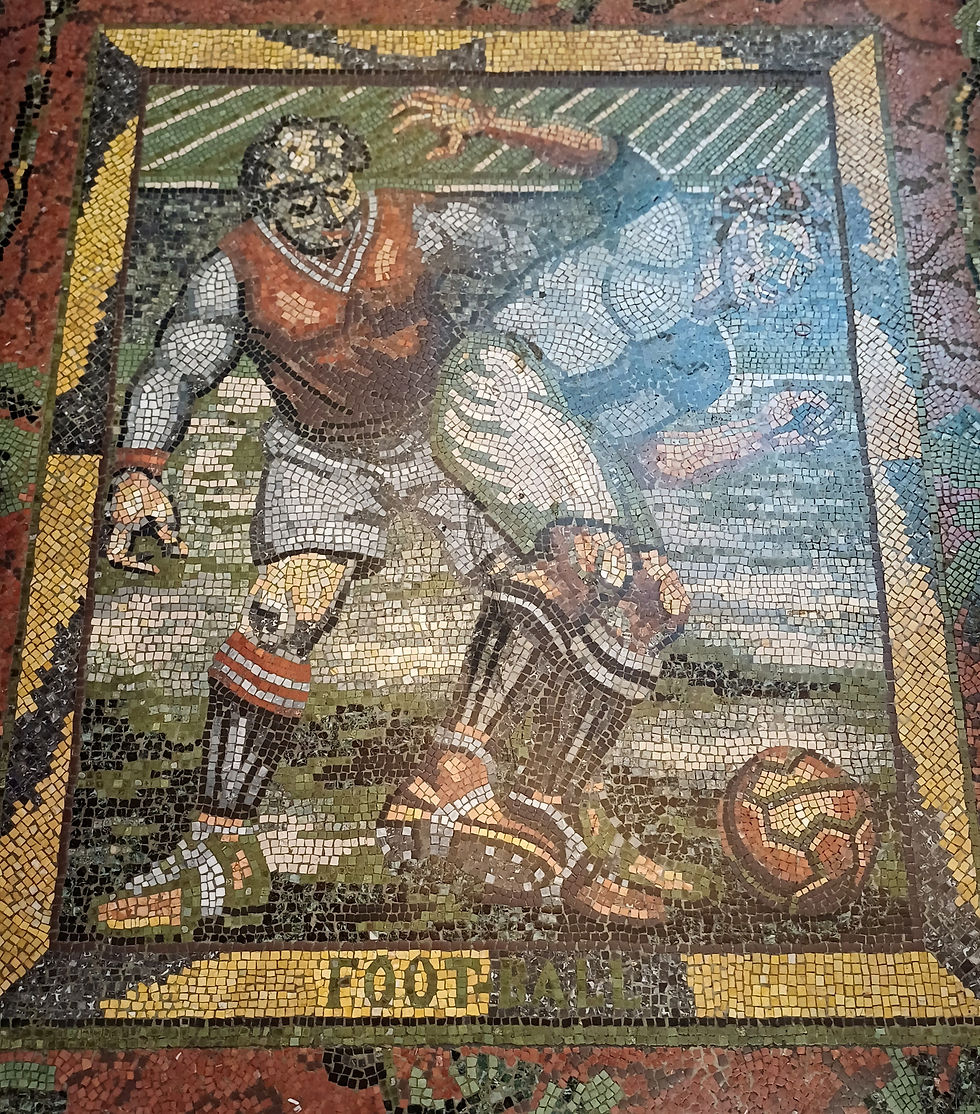
FOOTBALL: two footballers tackling.
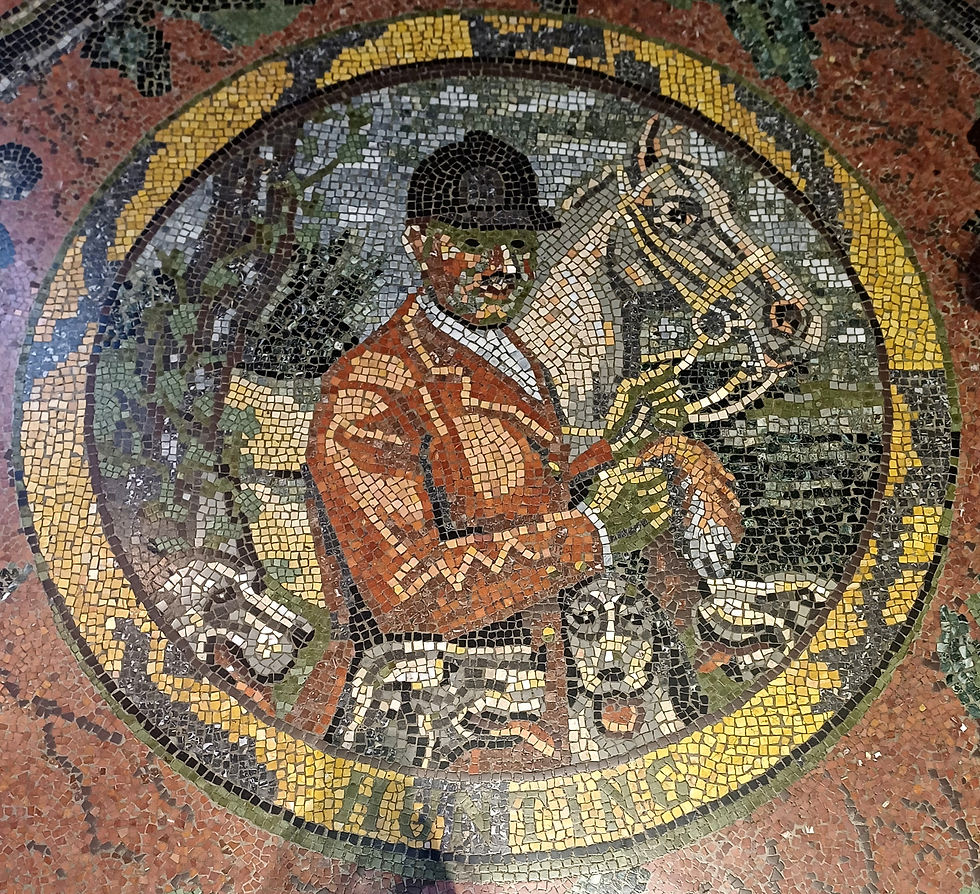
HUNTING: a huntsman with his horse and dogs.
MUD PIE: three mud pies, a bucket and spade.

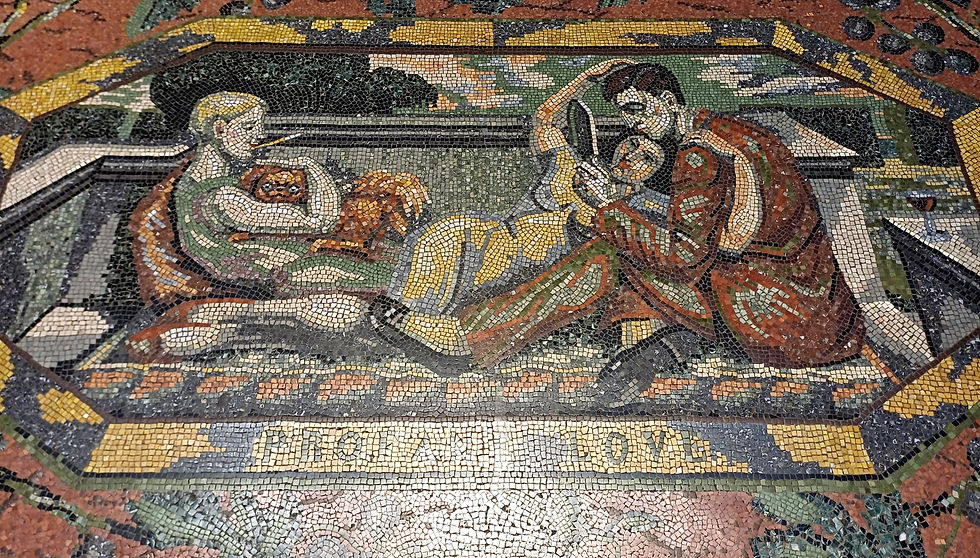
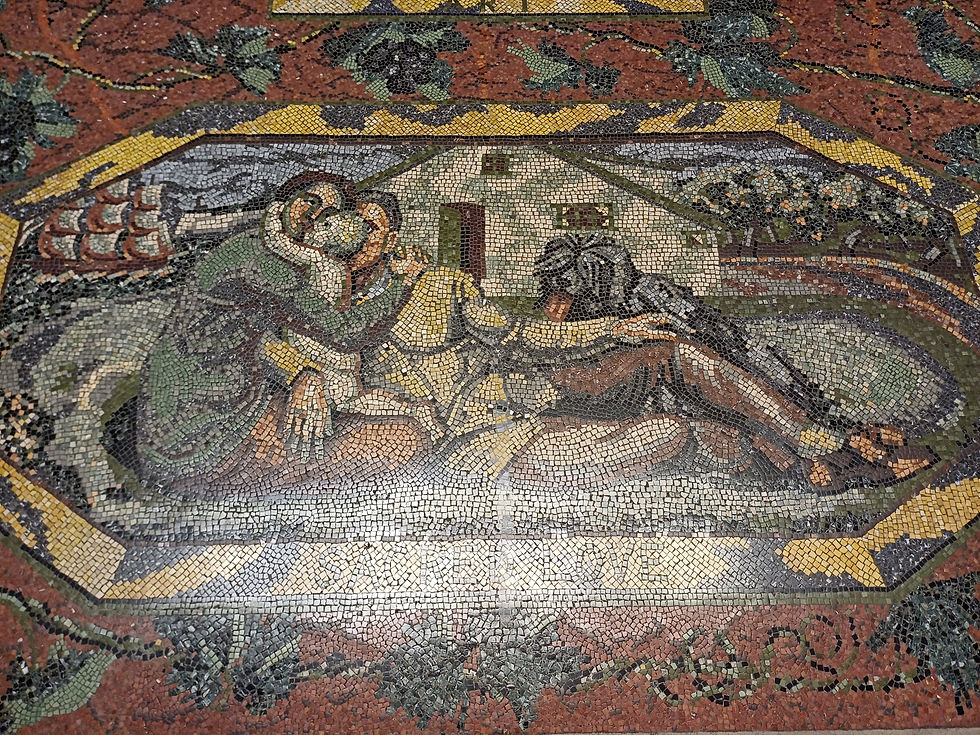
PROFANE LOVE: a man and two girls, one with a dog (which doesn't appear to feel the love).
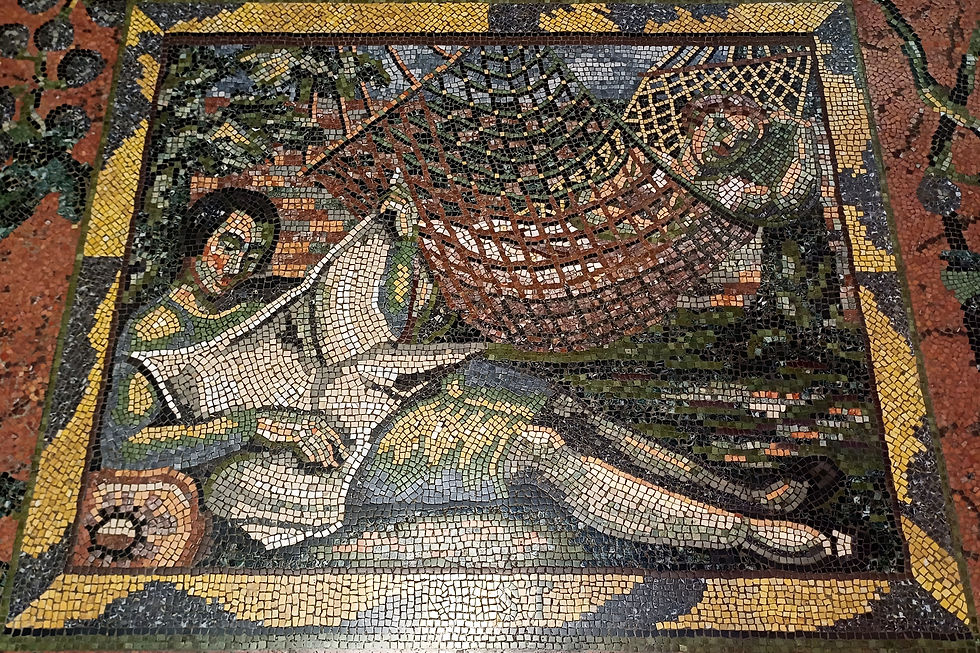
REST: a girl in a hammock; another reading a newspaper on the grass.
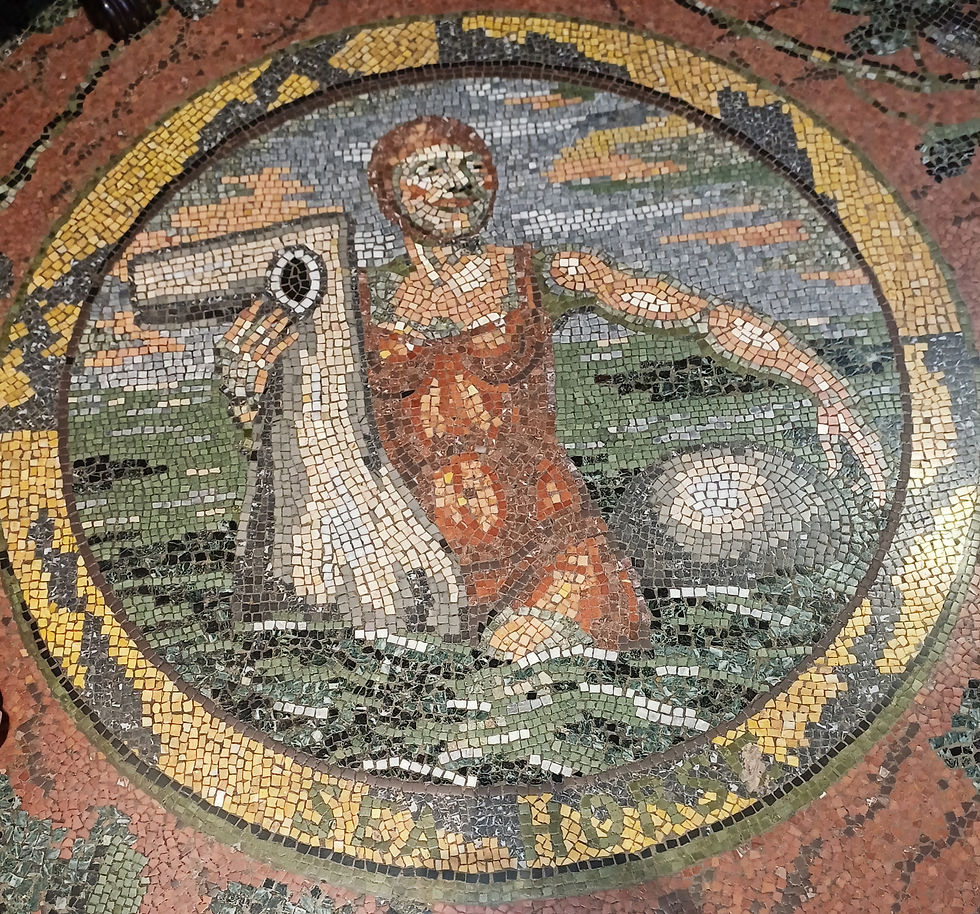
SEA-HORSE: a girl riding an inflatable horse.
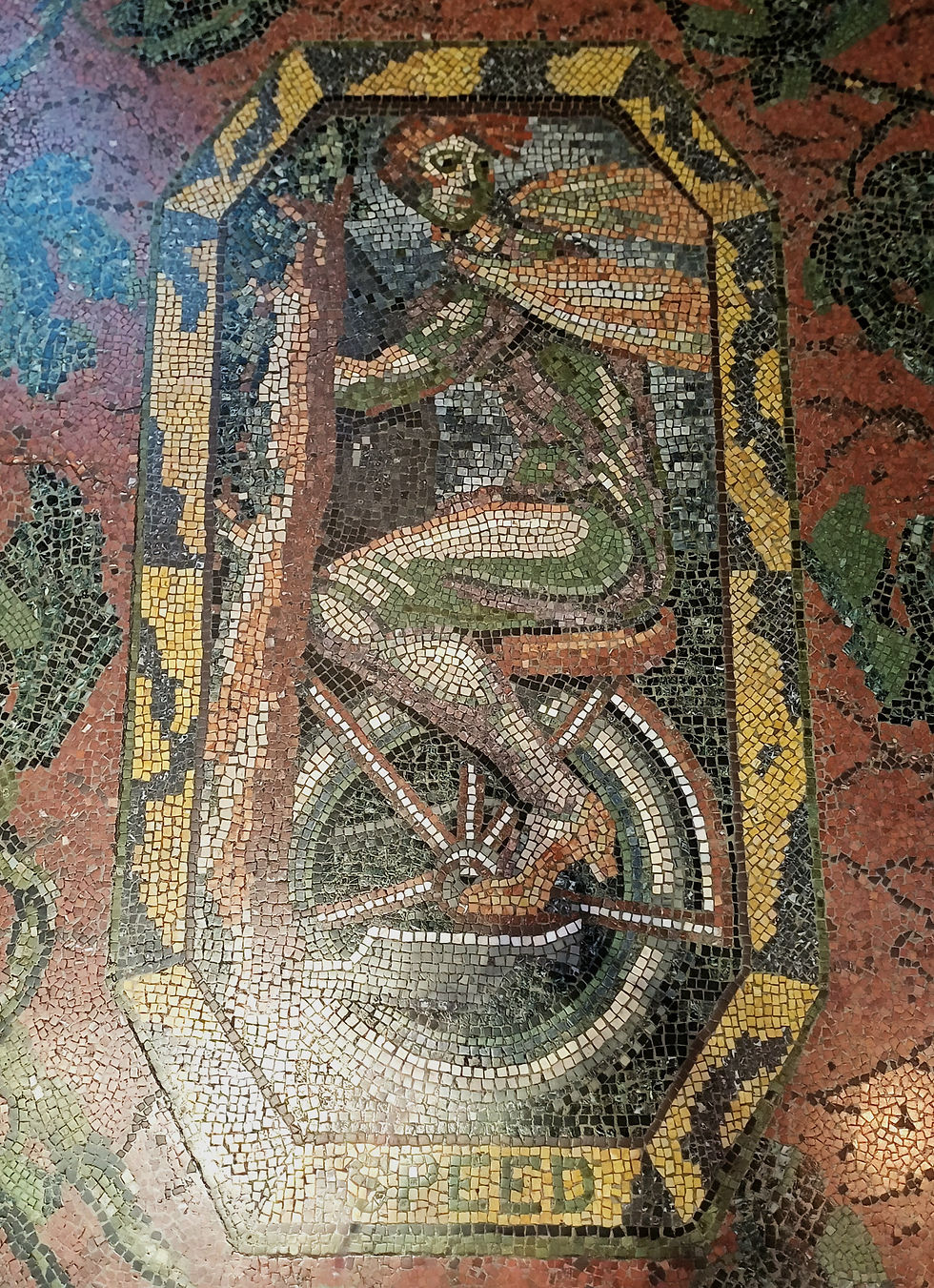
SPEED: a girl riding the pillion of a motorcycle.
West Vestibule: The Labours Of Life

Opened on 31 May 1928, the Labours Of Life was also the gift of Samuel Courtauld and other benefactors.
ART: a sculptor modelling a statue.

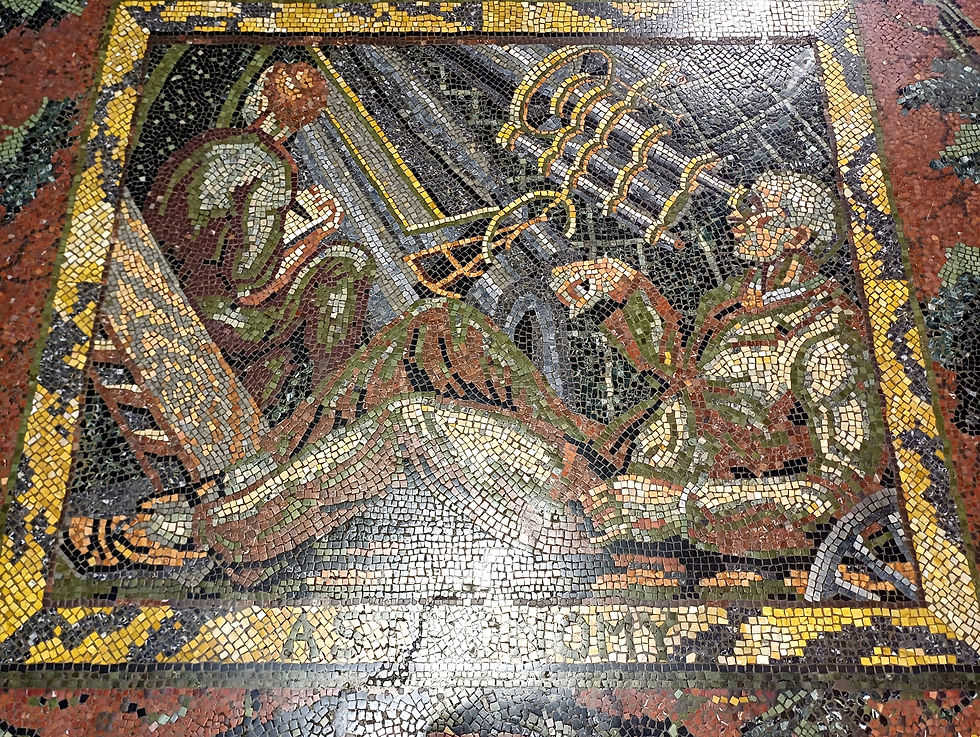
ASTRONOMY: an astronomer at his telescope.
COMMERCE: a Covent Garden porter carrying a pile of baskets.
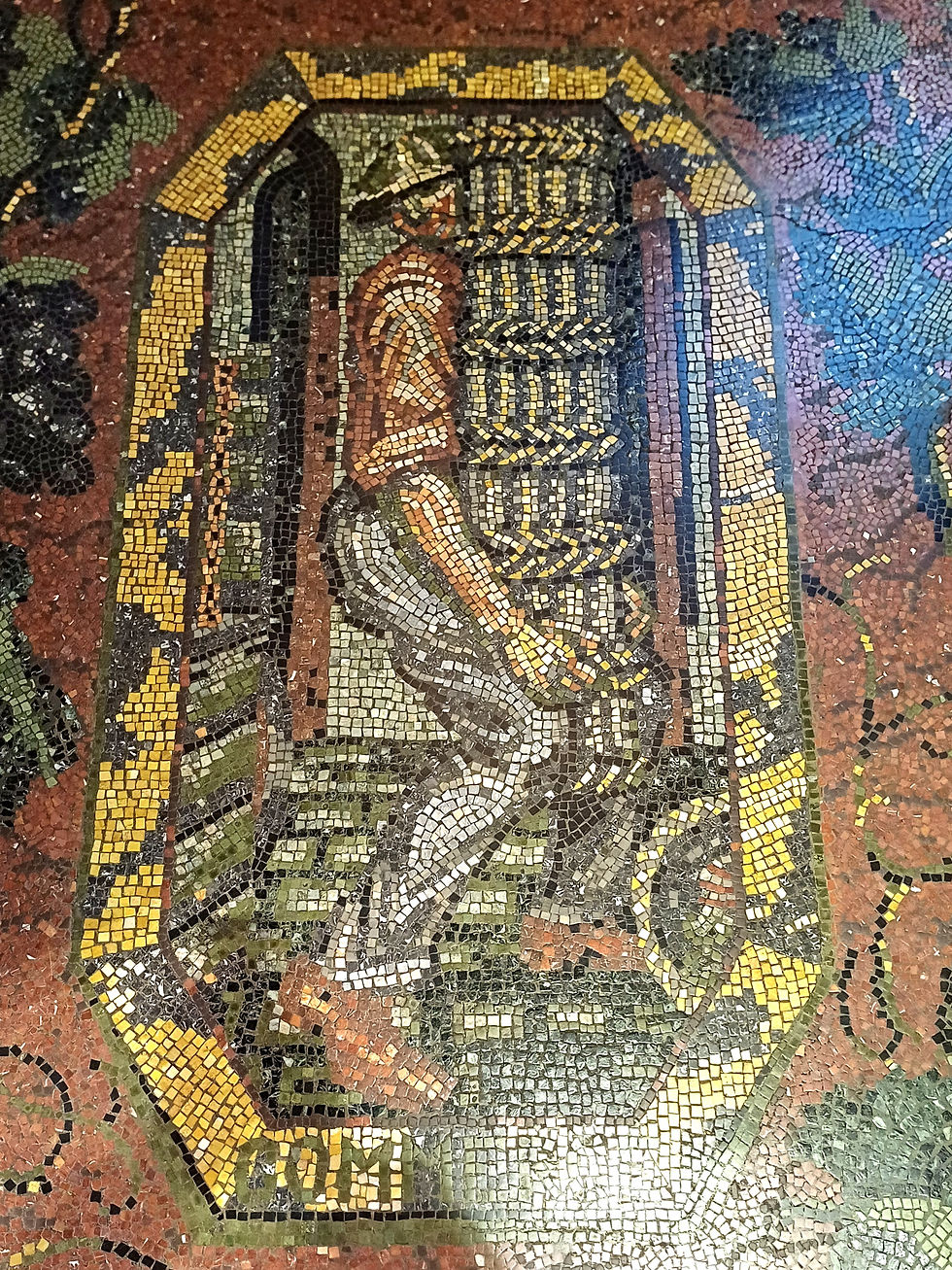
ENGINEERING: a man working an electric drill.
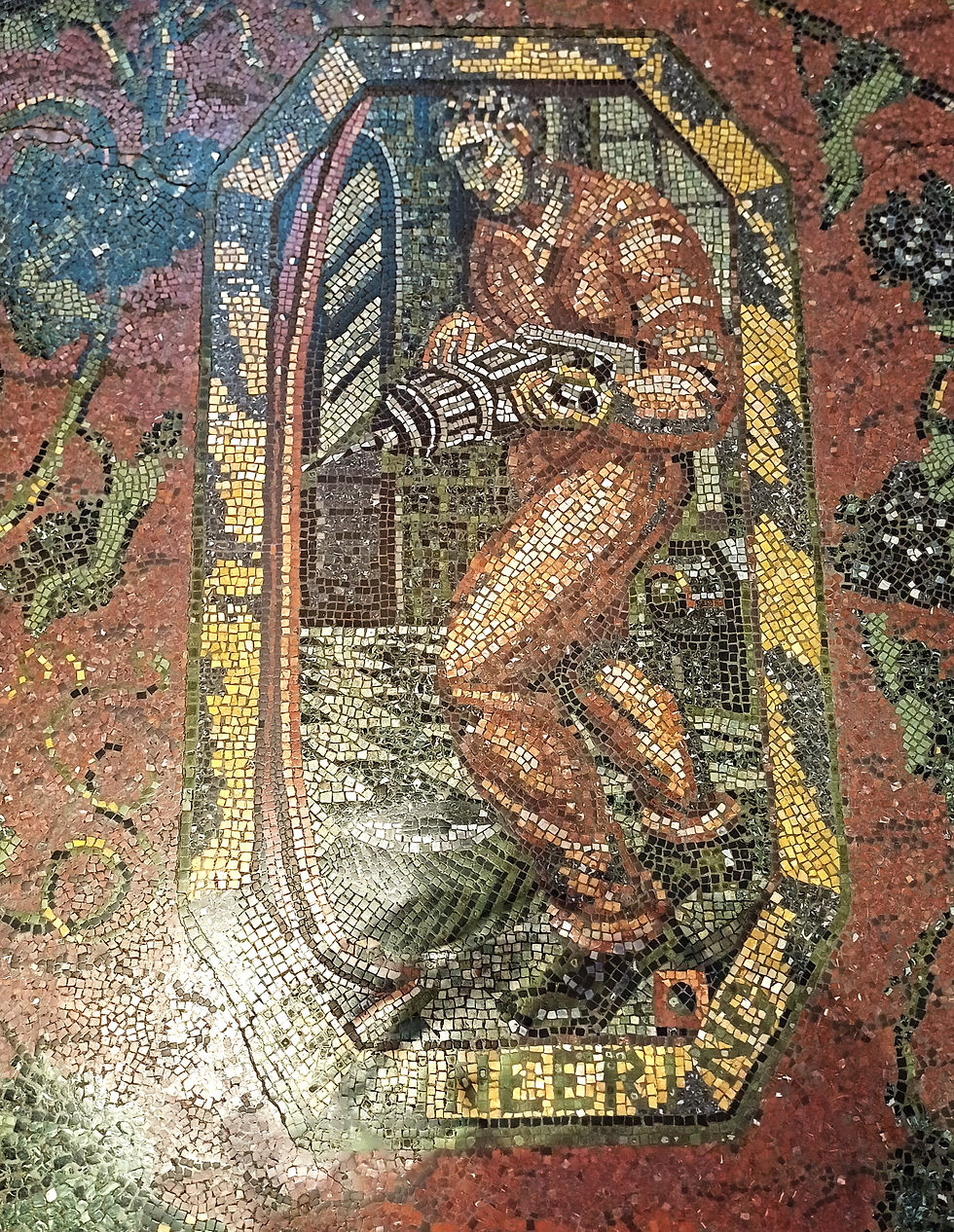
EXPLORING: a man taking a moving picture of a zebra (not visible as of mid December 2025, without exploring underneath a Christmas tree).
FARMING: a woman washing a pig.

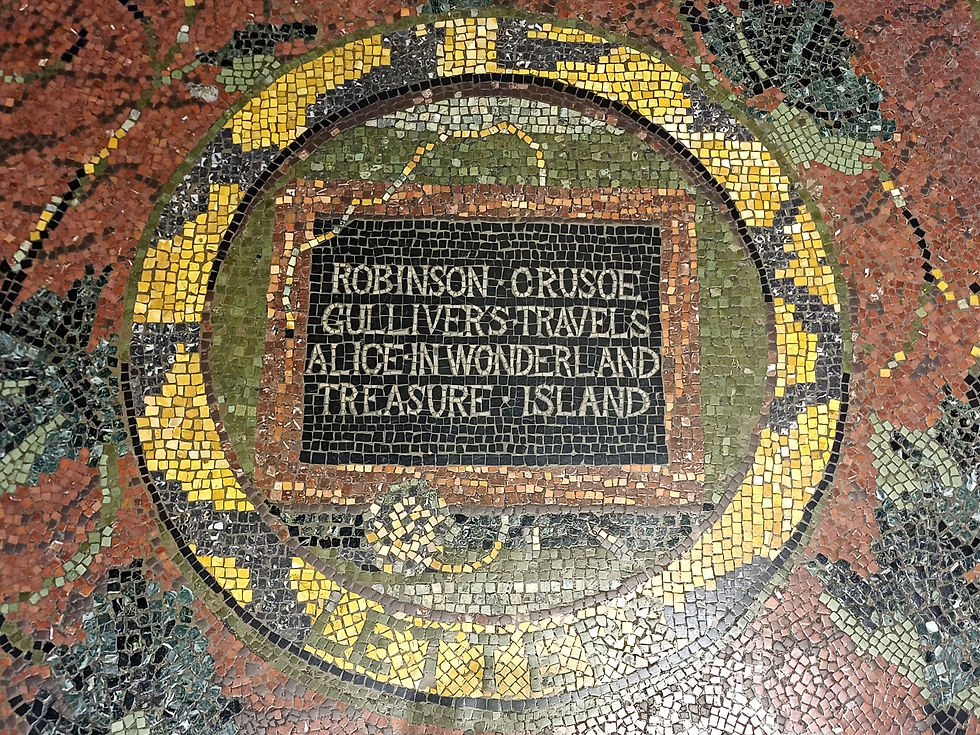
LETTERS: a still life of a child's slate and sponge with the names of favourite children's books.
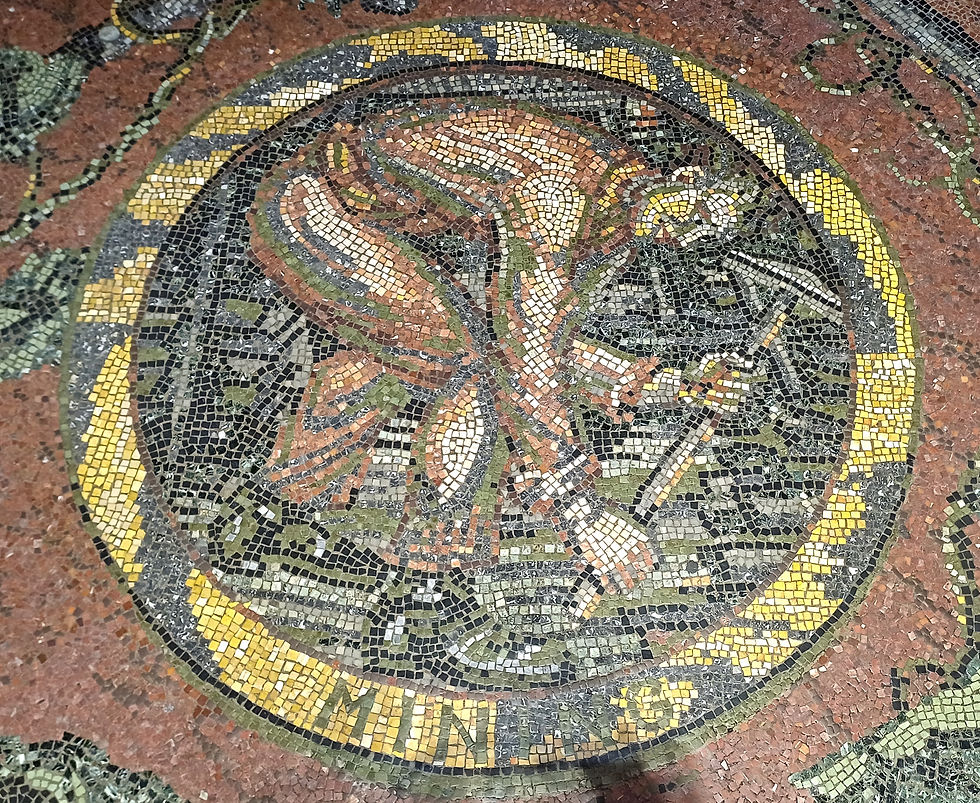
MINING: a coalminer at work.
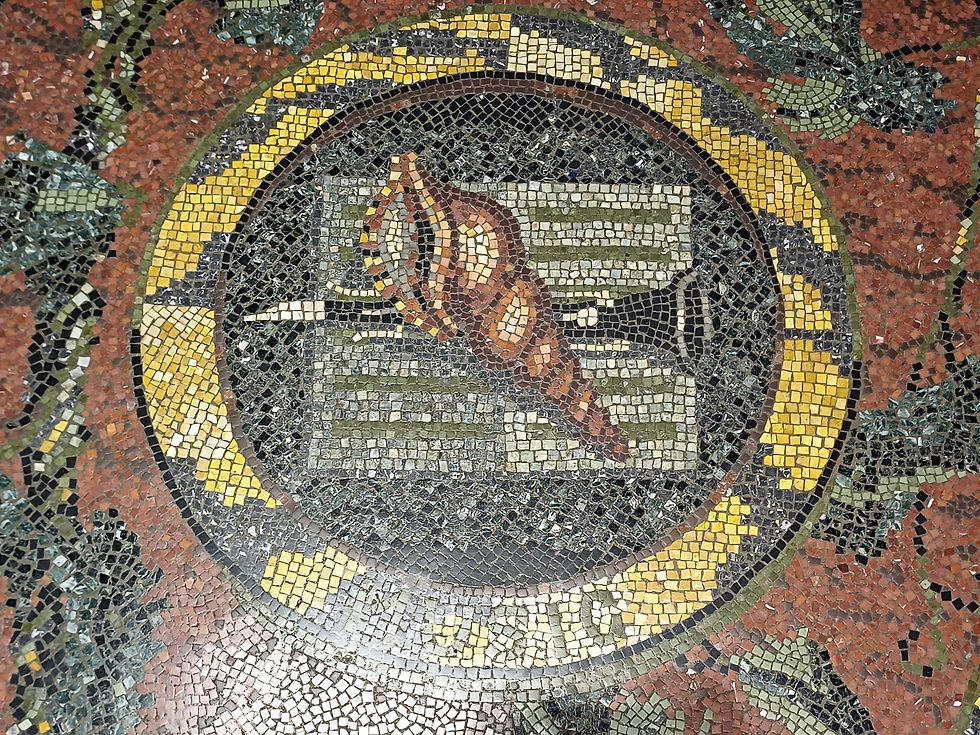
MUSIC: a still life of a shell, a flute and a book.
SACRED LOVE: a father, mother, child and dog.
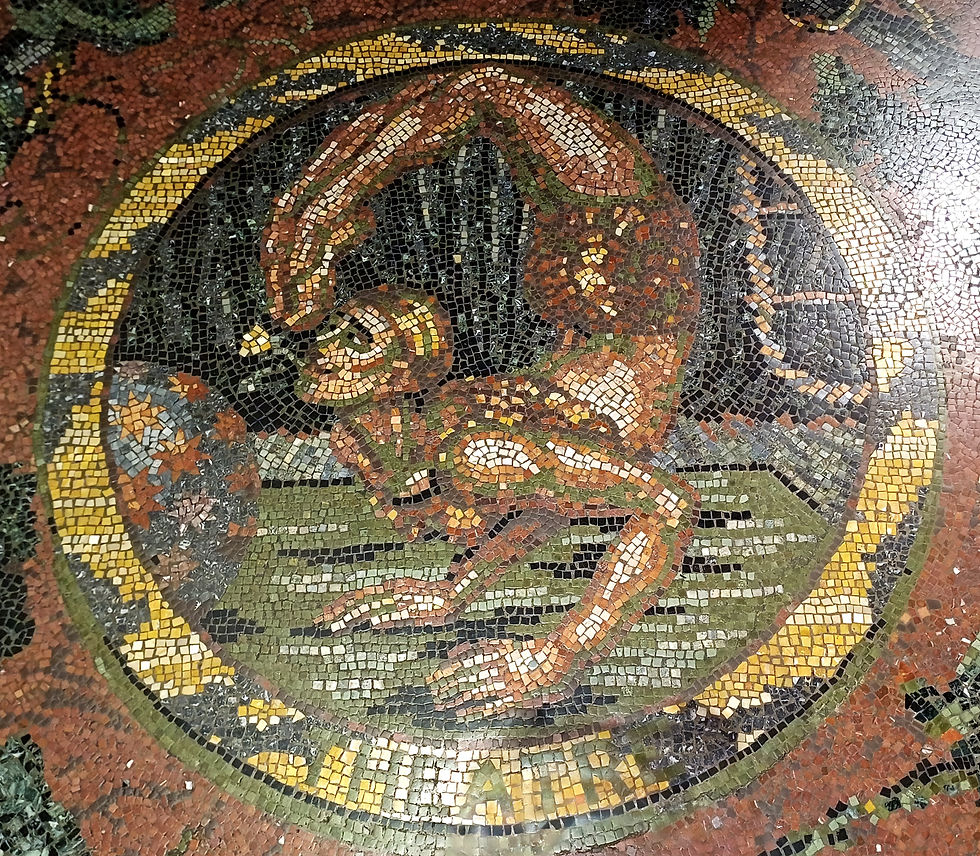
SCIENCE: a student of prehistoric animals in the Natural History Museum.

THEATRE: a contortionist.
It is easy to walk over these mosaics on your way to look at the National Gallery's vast array of paintings and barely notice them. Next time you are visiting, take some time to enjoy these insightful and often humorous works.
Walks available for booking
For a schedule of forthcoming London On The Ground guided walks and tours, please click here.


This is a brilliant post. I will spend time to look at these mosaics in detail next time I'm visiting the gallery. Thank you.